Label Manufacturer: Who Does What on Your Job
Three quotes, three websites, and no practical way to visit any of them.
Every quote you are holding says factory direct. Every site has a photograph of a press on it. For one run of labels, flying out to look is not a sensible use of the budget, and a video call shows you whatever the camera is pointed at.
So the choice gets made on price, and the part that costs money arrives later: a two-day wait for an answer that should have taken ten minutes, a color that nobody will take responsibility for, a cutting die that turns out to be sitting at a company you were never told about.
What can be checked from a distance is narrower than a factory visit, and more useful than one. It comes down to whether the answers you get are specific: the steps a job actually goes through, what changes hands at each of them, and the work that gets turned down. This page sets out all three. The same questions work on the other names on your list.
- Step 01Material selection
- Step 02Artwork
- Step 03Sampling
- Step 04Production
- Step 05Finishing
- Step 06Delivery
The six hand-offs
Production Route: Material Selection Through to Delivery
Each step below names what gets decided there and what reaches you when it is done.
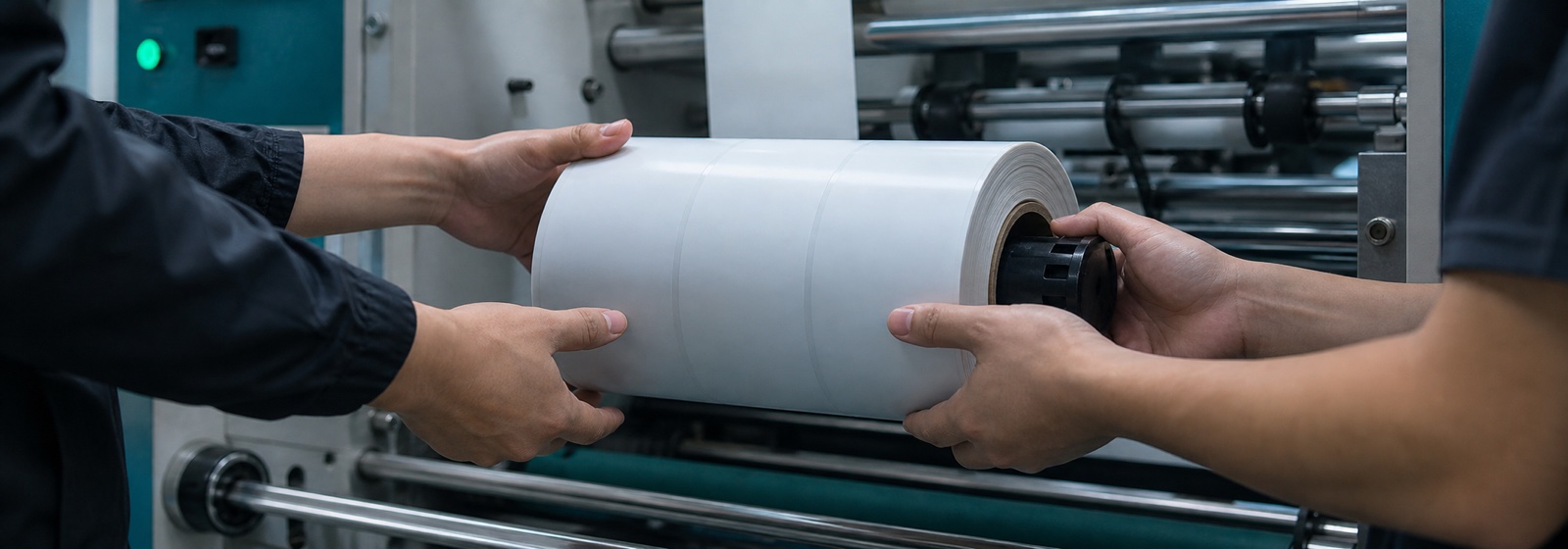
Below is the route a job takes from the day a specification arrives to the day the cases go out. What is worth reading is not the step names, which every supplier has, but the handover under each one: the thing that physically moves, and the point at which you can stop the job.
Step 01
Material selection
The container it goes onto and the conditions it has to survive narrow the material choice down to a short list. That narrowing is done by the people who will print the job, not by a catalog page, because the same specification behaves differently depending on which press it ends up on.
Handover: a recommended construction with the reasoning attached, in language you can forward to whoever asked you to source this.
Step 02
Artwork
Your file is read against what the press and the die can physically do before anything is scheduled. If something cannot run as drawn, that surfaces here rather than after tooling exists.
Handover: your file back, with the points that need a decision from you marked on it.
Step 03
Sampling
A physical sample is made before the run is scheduled. This step exists so that you can stop the job.
Handover: labels in your hand, on the specified material, to test yourself.
Step 04
Production
The job goes onto the press it was specified for, and the specification travels with it.
Handover: nothing reaches you at this step, and that is the honest thing to say about it. It is worth knowing which decisions are already locked by the time a job gets here, which is what the confirmation points further down this page are for.
Step 05
Finishing
Cutting to outline, surface work and winding happen after printing and are a separate operation from it.
Handover: the labels in the physical form you ordered. If an outline or a wind direction turns out wrong, this is the step it traces back to and the step that answers for it.
Step 06
Delivery
Cases are made up under your order and released. What to tell us so that goes right is set out further down.
Handover: the order leaves, and anything still open on it stays with the person you have been dealing with.
Who makes the call
Print Method Assignment: Who Decides Which Press Your Job Runs On
The method is assigned while your job is priced, and the assignment is written on the quote.
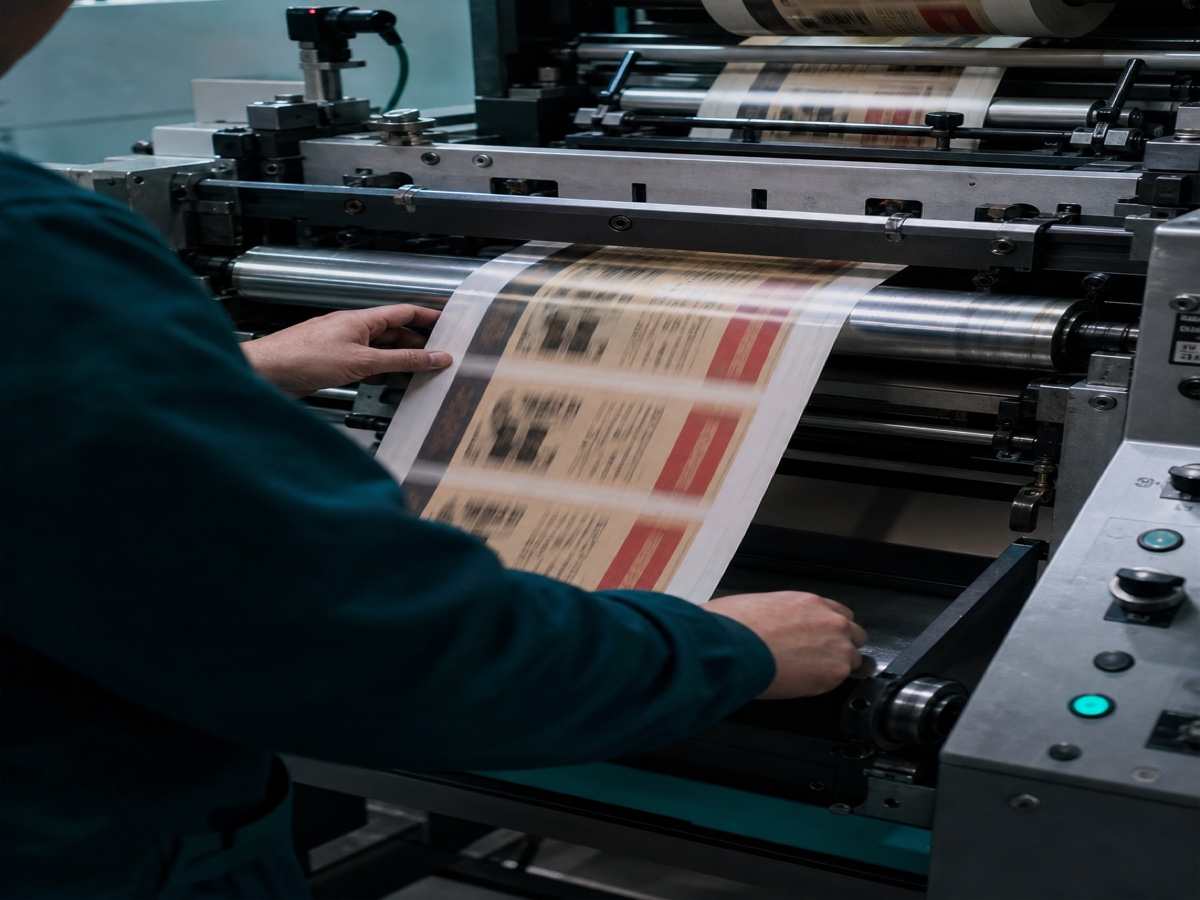
Both digital and flexo presses run here. What that changes for you is not a technical argument about the two methods, which is set out elsewhere on this site. It is who is allowed to make the call, and whether you are told what the call was.
The assignment is made by the production side while the job is being priced, against three features of the order rather than against convenience. A supplier with one press has one answer available to it, and the answer will be the press it owns.
Assigned against: design count · quantity behind each design · what the artwork asks for.
Written on the quote: the method your job has been assigned to.
That last line is the part you can hold on to. Ask why the job was put where it was put, and ask what would move it, before you approve anything.
Where colour is owned
Pantone Spot Color: What You Can Ask For in Writing
Color goes wrong in the gap between the people who specify it and the people who mix it.
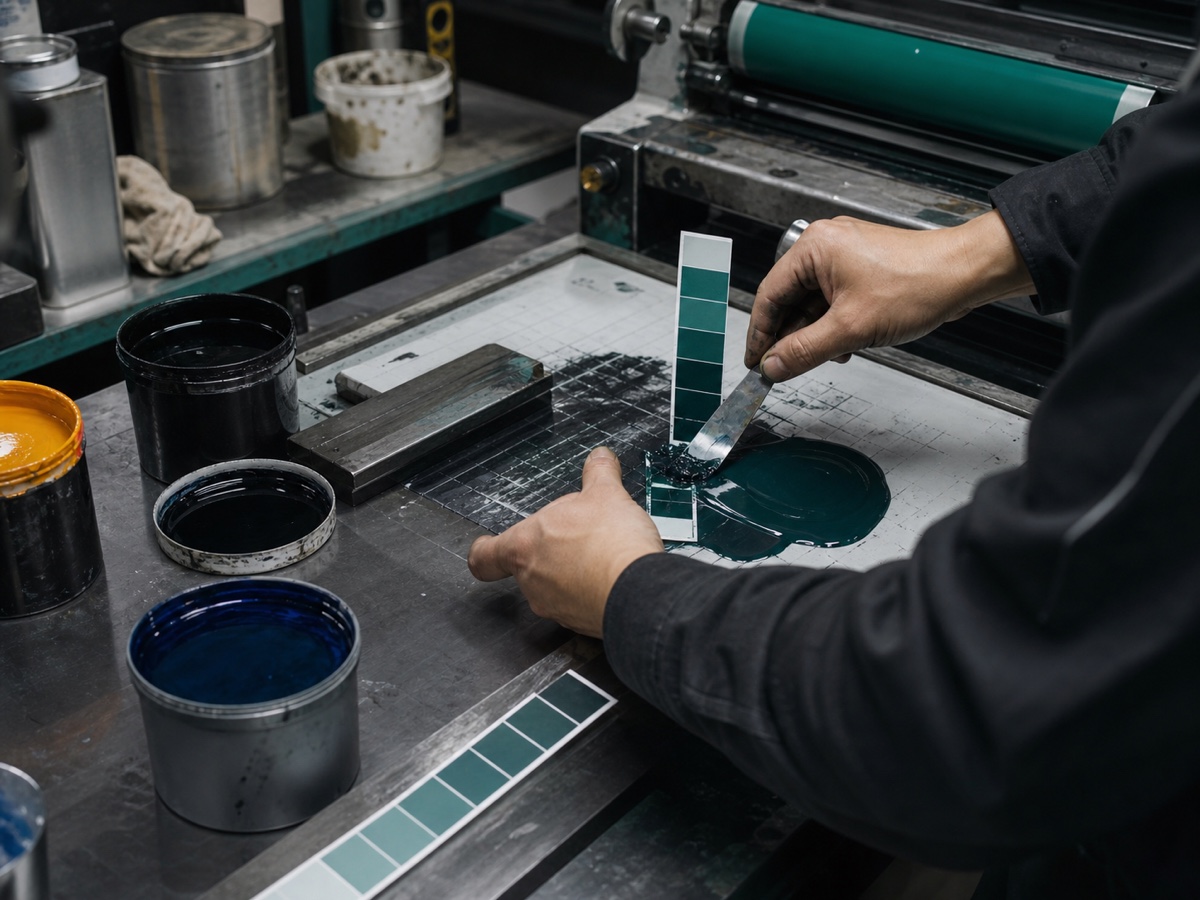
When a color comes back wrong, there are usually three parties in the conversation: the designer who supplied the file, whoever printed it, and somebody in the middle relaying messages between them. Each party is individually correct. The color is still wrong, and it stays wrong, because no one in that chain both owns the problem and can act on it.
A number in your hand is worth more than an assurance, because it is specific and because it is checkable by anybody you hand it to.
What it does not buy you is a promise that two runs a year apart will be indistinguishable. We do not make that promise, and we do not publish tolerance figures for it.
Where responsibility moves
Confirmation Points and Where Responsibility Moves
A job stops at a handful of points, and those are the points where responsibility changes hands.
Most of the delay in a label order is not technical. It is two parties each waiting on the other, both believing the ball is somewhere else. The points below are where a job stops, who has to move it, and what stops being free to change afterwards.
Specification agreed
You confirmNothing yet. Changing it here costs nothing.
Feasibility answered
We confirmWhether it can run as written. Saying that it cannot is ours to do here, not after you have accepted a quote against it.
Artwork released
You confirmThe outline and the printed content, together. A change after this is a change to tooling, not an edit to a document.
Sample issued
We confirmWhat could be held. If something you asked for could not be, saying so before you approve is ours to do, not yours to discover.
Sample approved
You confirmThe reference. From here the job is compared against the sample you approved, and this is the last point at which changing it is cheap.
After that the job is in production, and the open questions stop being about the design and start being about the goods.
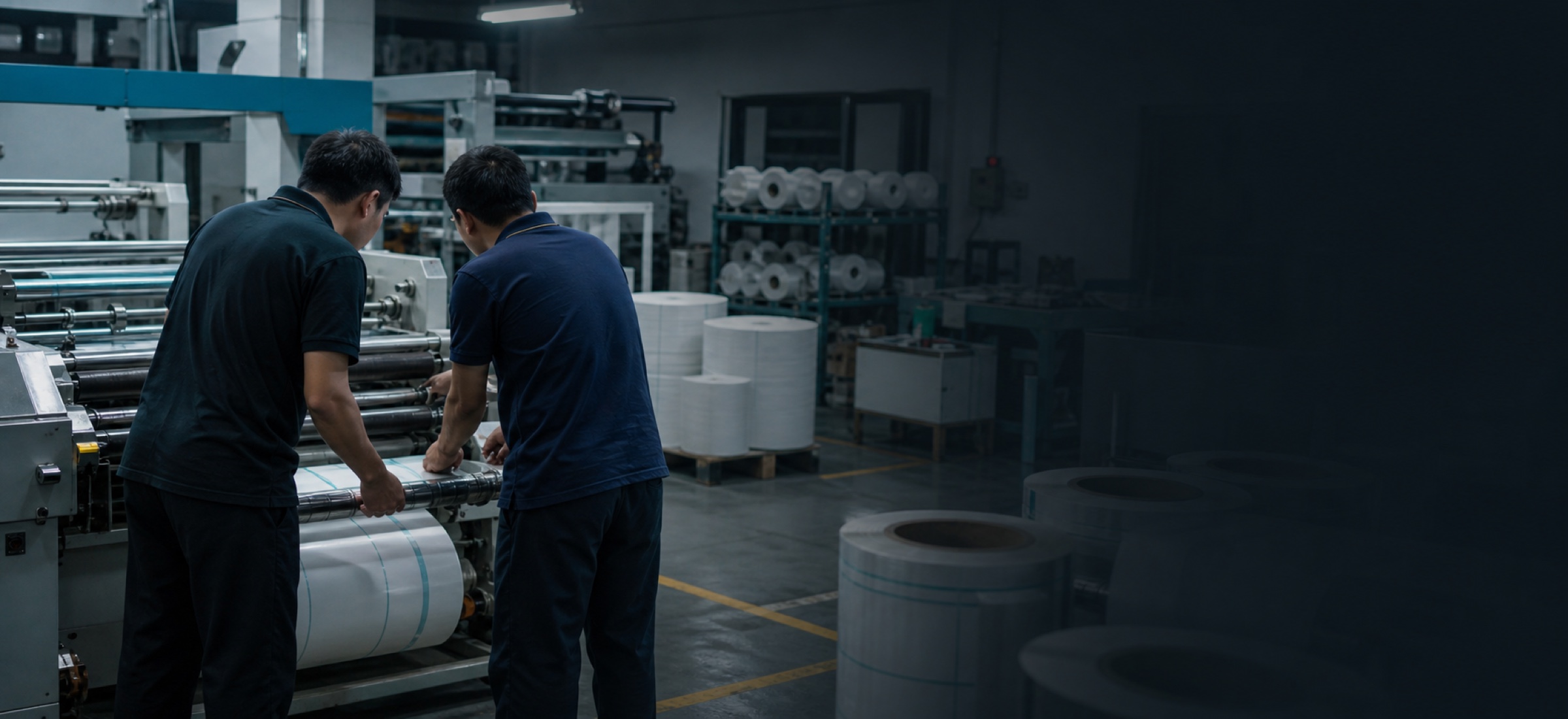
Checking from a distance
Checking a Label Manufacturer From a Distance
Questions that only get a specific answer from whoever is actually making the labels.
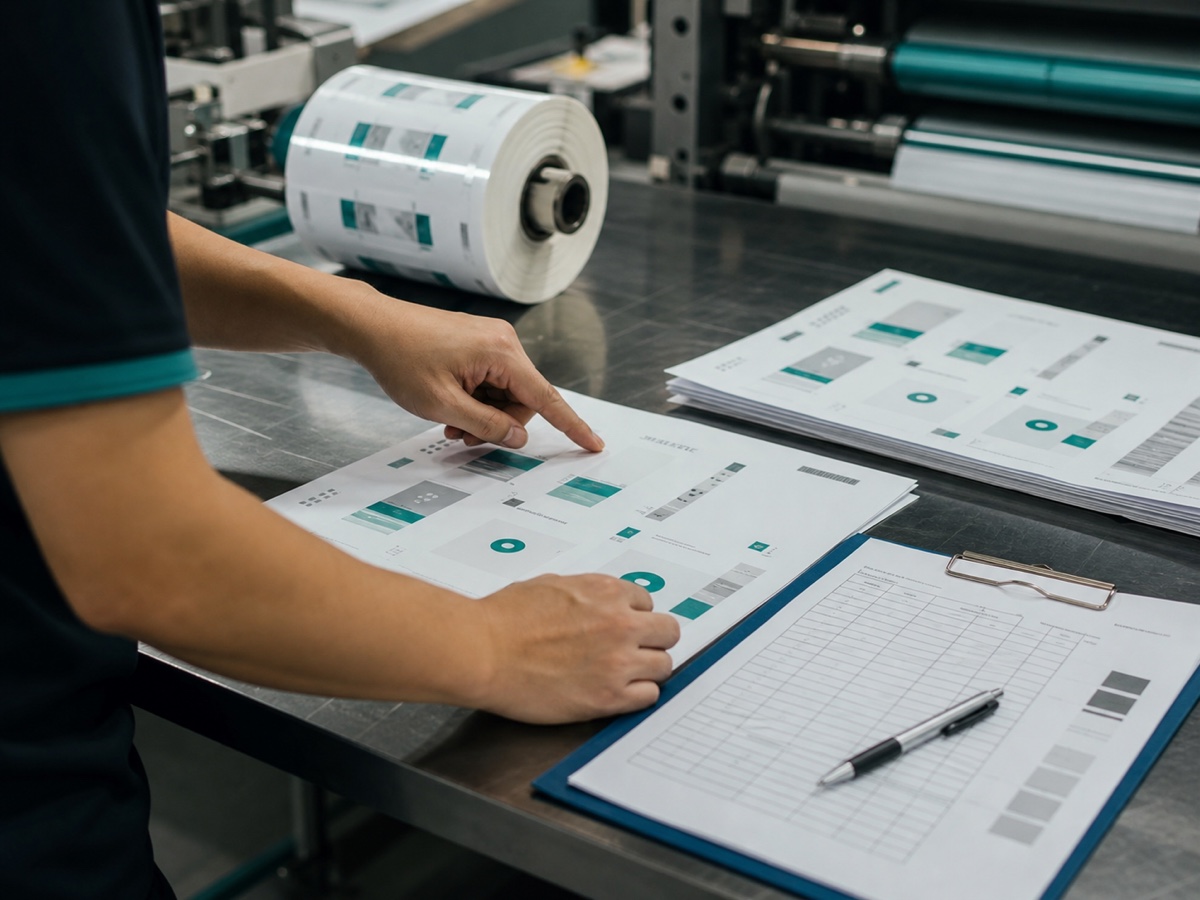
If you are comparing custom label manufacturers, most of what you can read on their sites is the same set of claims in a different typeface. The questions below are harder to answer from a desk that does not touch the work. Put them to us in writing, and put them to the other two names on your list.
| Ask any supplier | What a direct answer sounds like | Ours |
|---|---|---|
| How long does a one-word change to approved artwork take, and who makes it? |
A named step and a named role, not “we will check with the factory”
|
The change is made at the step that prepared the file, and the person telling you it is done is the person holding it. We do not quote this in hours, because it depends on where the job already is. |
| If a color comes out wrong, who decides that it is wrong? |
One party who can both judge it and fix it
|
Ink mixing is part of the printing operation, so the judgment and the correction sit with the same people. |
| Where is the cutting die for my job kept? |
A step and a location, not “with our supplier”
|
At the finishing step, filed under your job. |
| What would you turn down? |
A specific list, given without hesitation
|
The next section. |
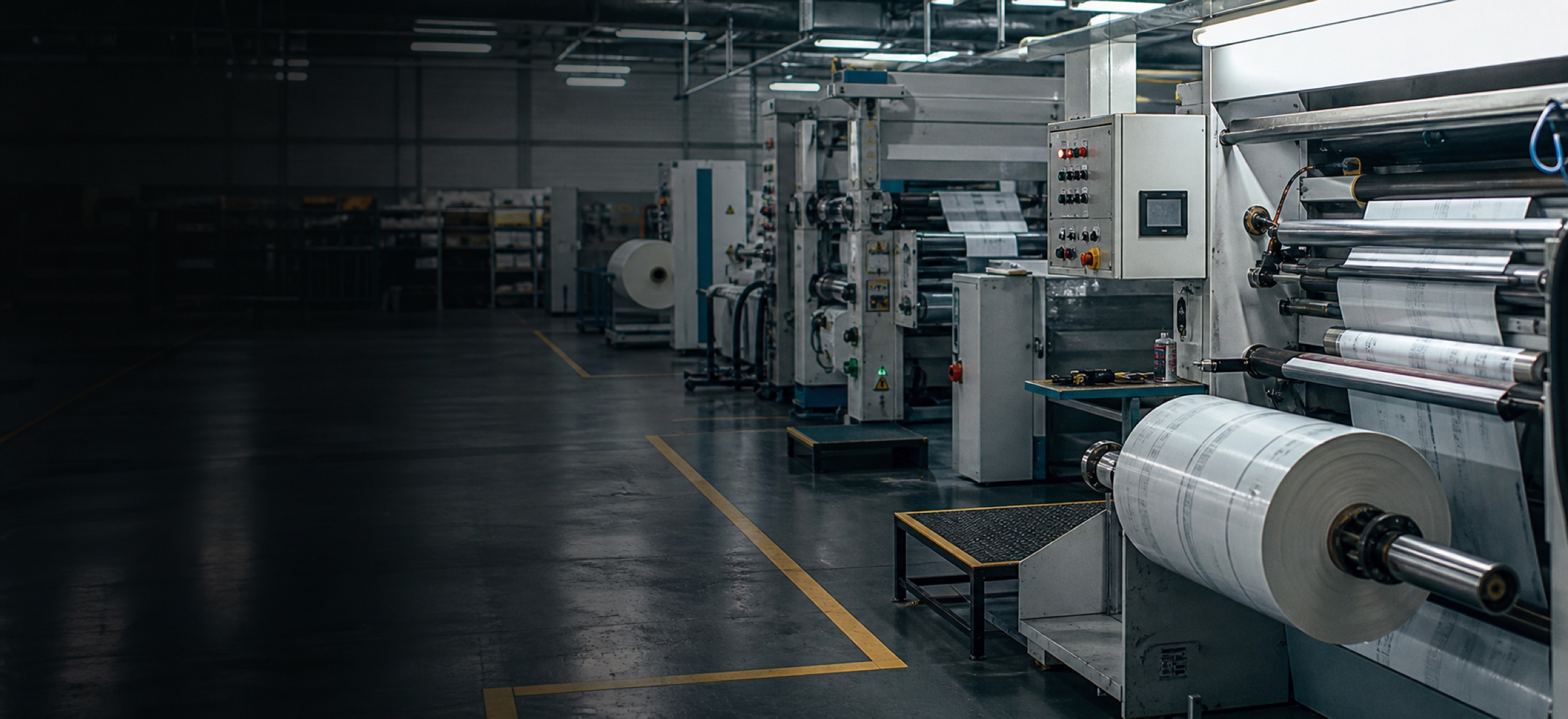
Where we stop
What We Do Not Take On
Work that sits outside what we run, and the reason it sits outside.
This list is rarely published, because every line on it is an order turned away. It is also the quickest way for you to find out whether we are the wrong shop for the job in front of you.
We do not take in your finished goods and apply labels to them. Labels are applied here only as part of producing them. If what you need is somebody to label your product for you, that is a different kind of operation and we would be a poor choice for it.
We do not warehouse goods for drawdown and we do not run blanket orders released monthly. Consumable lines are produced and dispatched against an order.
We supply the labels and the rolls, not the machines that print them. Presses, applicators and desktop printers are somebody else's trade.
A different process on different equipment. We do not run it.
No figure goes on it, because there is nothing measured here to stand behind one. Frequency and construction questions belong with RFID and security label supply.
If your job is on this list, the first email is the cheapest place to find that out.
Before the order is placed
Shipping Instructions to Send With Your Order
What to tell us at order stage so the goods arrive in a state you can use.
Most of what goes wrong between a finished order and your loading bay is settled at order stage, by information nobody thought to ask for. These belong in the order itself rather than in an email sent after the goods are made.
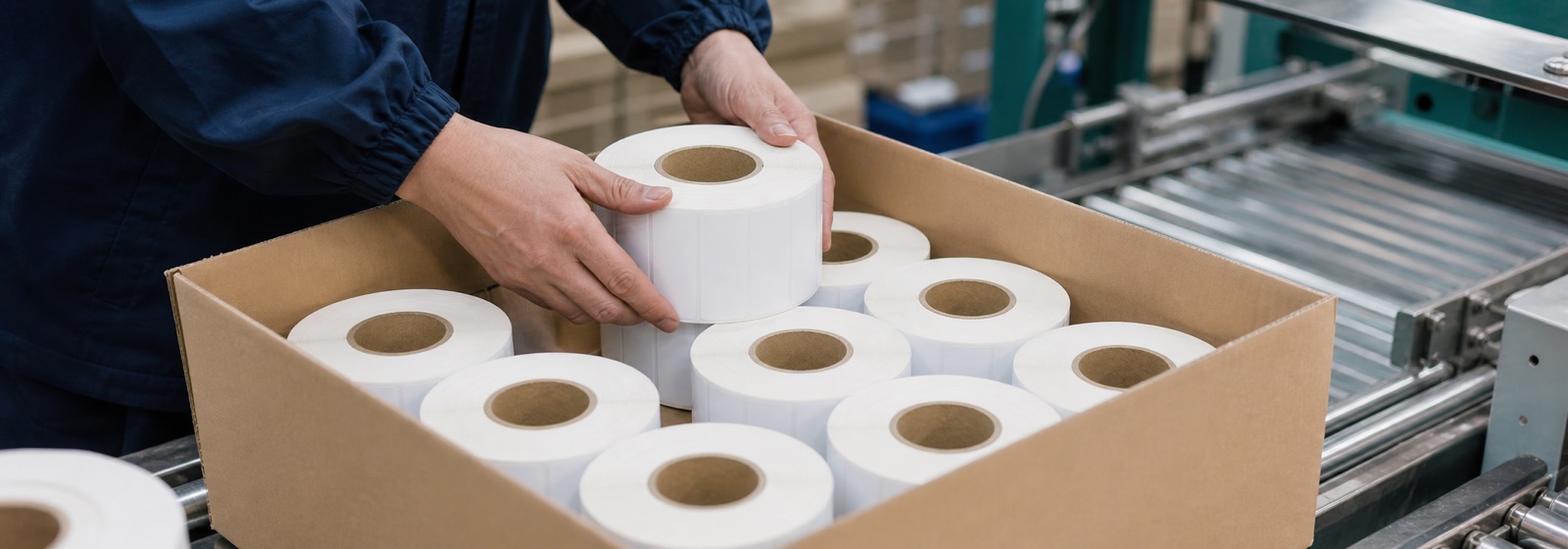
Who answers
Sales Contact and Response Times
One contact, and a rule for what happens when the answer is not theirs to give.
You are dealing with the sales team here rather than a rotating queue. That matters for one practical reason: the specification of your job sits with the person you have been writing to, so a second email does not start from nothing.
Quotes are answered within one working day, and a specification sent to the sales team at a custom label manufacturer reaches the same place.
Technical questions work differently. Some of them cannot be answered from a desk, because the answer depends on what a press or a die can actually do. When that is the case, the reply names the step it is waiting on.
Email [email protected], or WhatsApp +86 177 0272 7677.
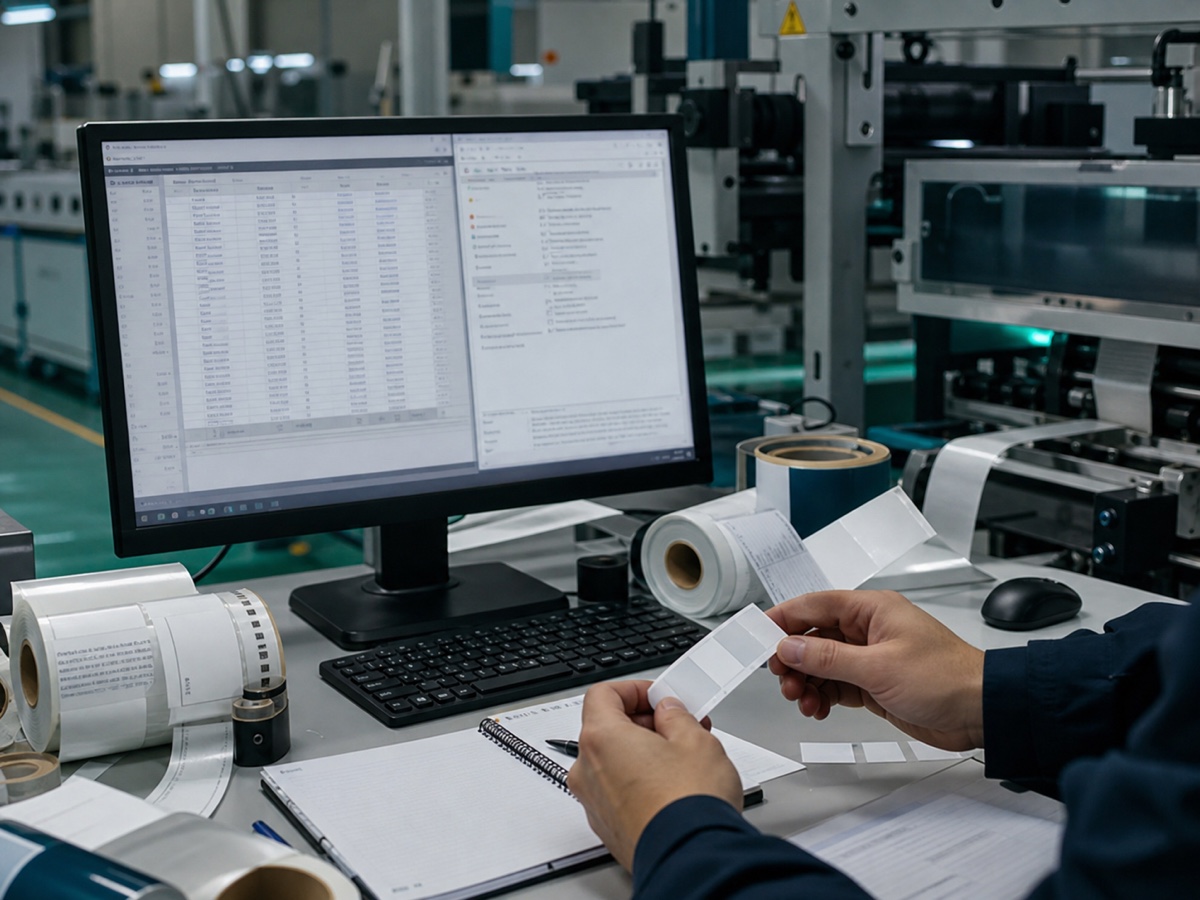
Background, with its limits
Group Background: Printing and Packaging Experience
The background behind this operation, stated with its limits.
LabelRoll Pro sits inside a group with more than twenty years in printing and packaging, and more than 1,200 brands have been served across the group.
Those are group figures and that is the whole of what they establish: the operation behind this site has been doing this kind of work for a while, at some scale. They are not evidence about your job, and they are not a substitute for the questions further up this page.
None of those brands are named here and there is no logo wall on this site, because we do not hold permission to use them.
Start here
Send Your Label Specification
The bar for a first email is lower than you think.
A finished specification is not needed to start. If you know what the label goes onto and roughly how many you need, that is enough for a first reply that is worth reading; the rest gets settled at the steps set out above. Artwork can follow by email after you send this.
Specifications across every line sit on the label and roll supply overview.
No file needed to get a first answer.