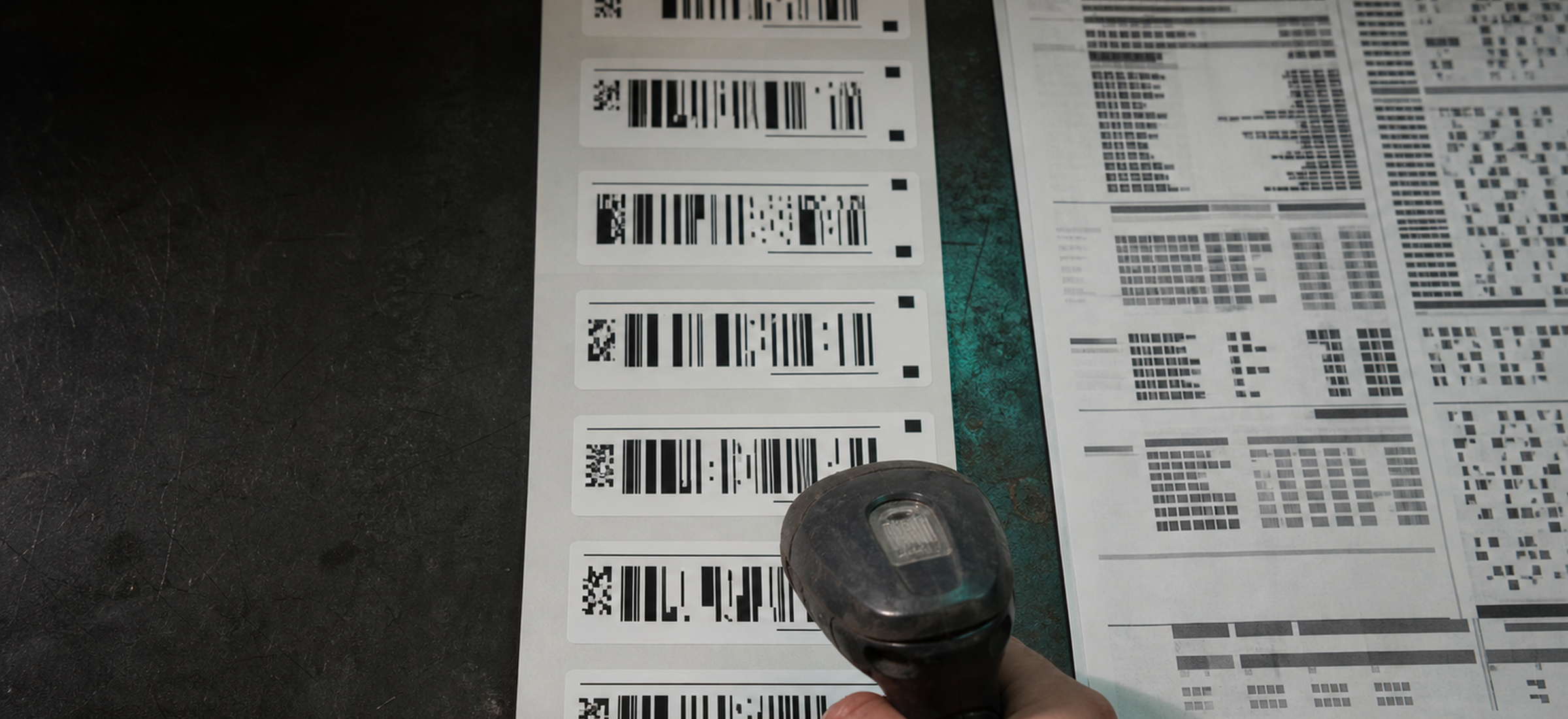
Barcode Labels: What a Coded Run Is Checked Against
Every code on the roll came from a file, and that file is what the printed result is held to.
A coded job arrives as a file and leaves as a roll, and the two have to agree at both ends. What gets handed over decides what can be printed. What comes off the run is read back against the same file before the rest of it is made.
The code families and where their numbering comes from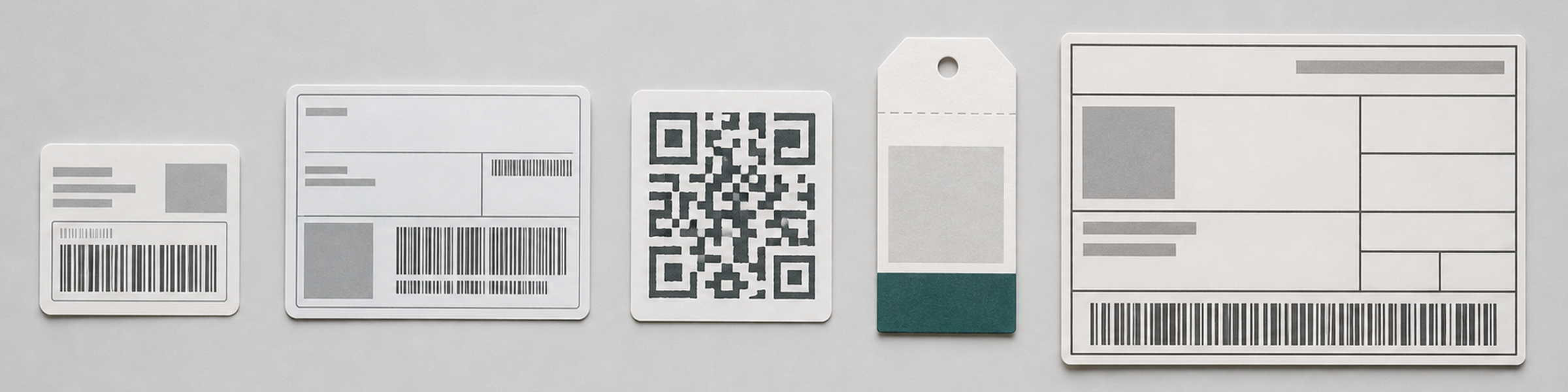
Barcode Types: Who the Numbering Belongs To, and What to Settle First
Whose numbering it is decides most of what follows.
Numbering rarely starts at the label. It comes from a retail master record, from a receiving system, or from whatever the code has to land in once it is scanned. The table sets out where each family's rules already live, and the detail that has to be fixed before an order goes in.
| Code family | Where the numbering rules live | What to settle before ordering |
|---|---|---|
| UPC / EAN | Not at the label. A prefix is issued to a company, and the item numbers underneath it are that company's own. | Which party the prefix is registered to. |
| Code 128 | With the receiving system, or with your own operation where the codes never leave it. | The character set, and the longest value that still has to fit. |
| QR | With whatever system the payload has to open in afterwards. | Which system the payload is being written for. |
| Garment hang-tag barcodes | With the retailer's product record, so the numbering follows their file rather than the order. | Whether a code belongs to the style-colour or to the individual SKU. |
| Pallet and asset codes | With your own storage or equipment register. | How far the number runs, and whether it also has to be read by eye. |
Nothing in this table is decided at the label. It is decided wherever the numbering already lives, which is why it is worth confirming while artwork can still move.
Variable Data Handover: What Comes In, and What Comes Back
A data file gets checked before it gets printed.
A file that opens cleanly is not yet a file that can be run. Ambiguity inside it turns into wrong labels rather than into an error message, so what arrives is checked while it is still cheap to change. File formats and the artwork side of a job are set out on the overview of artwork and variable data requirements; this page starts after the file has landed.
What comes in
- The values themselves, in the order they are meant to print.
- Where a series starts and where it endsStart and end value: the first and last code in a continuous series. It is how a run is described, and later how a reprint is described., which is also how a reprint gets described later on.
- The prefix, where the numbering carries one, and the company it was issued to.
- The payloadPayload: the content written inside a code rather than a number pointing at it, such as the text or address a QR carries. list, where the codes carry content instead of a number, and the system that content is written for.
What comes back
- Which column has been taken as which field, confirmed in writing before anything is scheduled.
- The first and last value of the series as they have been read, for you to check against your own record.
- What the gapsGaps: values missing out of the middle of a range, values that repeat, and values shorter than the rest of the run. are going to do: values missing out of the middle of a range, values that repeat, and values shorter than the rest of the run.
- Whether a check digit is expected to be sitting in the file already or to be derived from it, and which of those the run will assume.
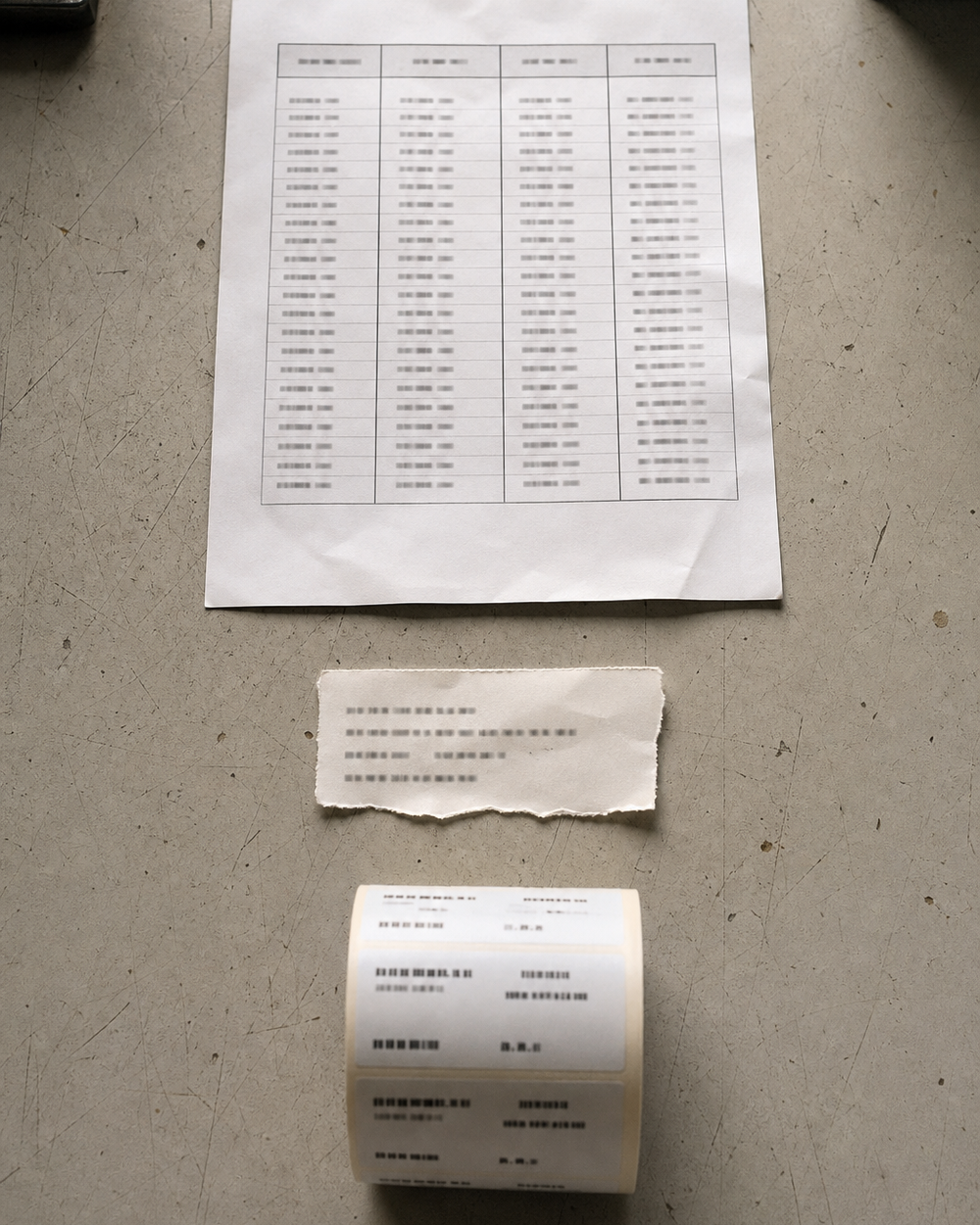
What the file leaves unclear is decided at your end.
Check a Code Against Your FileWhere Each Column Lands on the Label
What the mapping leaves open is the space each field has to live in.
How a file maps onto a run is already set out on the overview. What it does not settle is where each of those fields physically sits on the label, and what gives way when one of them comes back longer than the layout assumed.
| Field in the file | Where it lands on the label | What it presses on when the value runs long |
|---|---|---|
| The code value itself | The code block, positioned so it sits clear of everything printed around it. | Whatever sits beside it, because a longer value widens the block before it does anything else. |
| The human-readable line | Directly under the block, where it is read by eye whenever a scan is not available. | Its own type size, which is where legibility is quietly traded away first. |
| The batch, date or lot field | A fixed slot away from the code block, so it is found in the same place on every label. | The fixed copy next to it, since the slot stays put and the wording around it moves. |
| The fixed copy | Whatever the layout has left once the variable fields hold their slots. | Itself. It is the layer that gets shortened, because moving the code block re-opens what has already been agreed. |
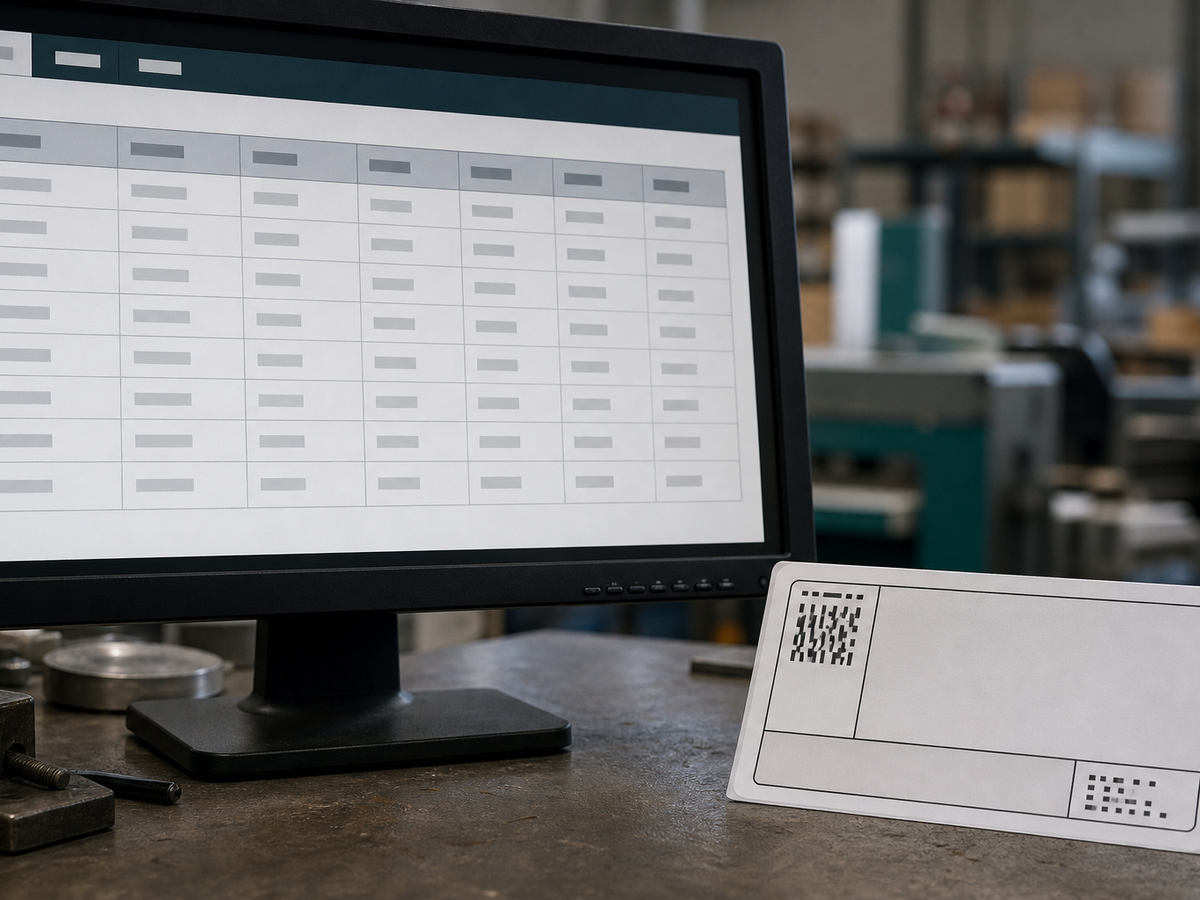
Agreeing that order in advance is what keeps a long value from being settled at the last minute by whoever notices it.
Serial Order on the Roll: Reprints, Counts and Where a Roll Is Split
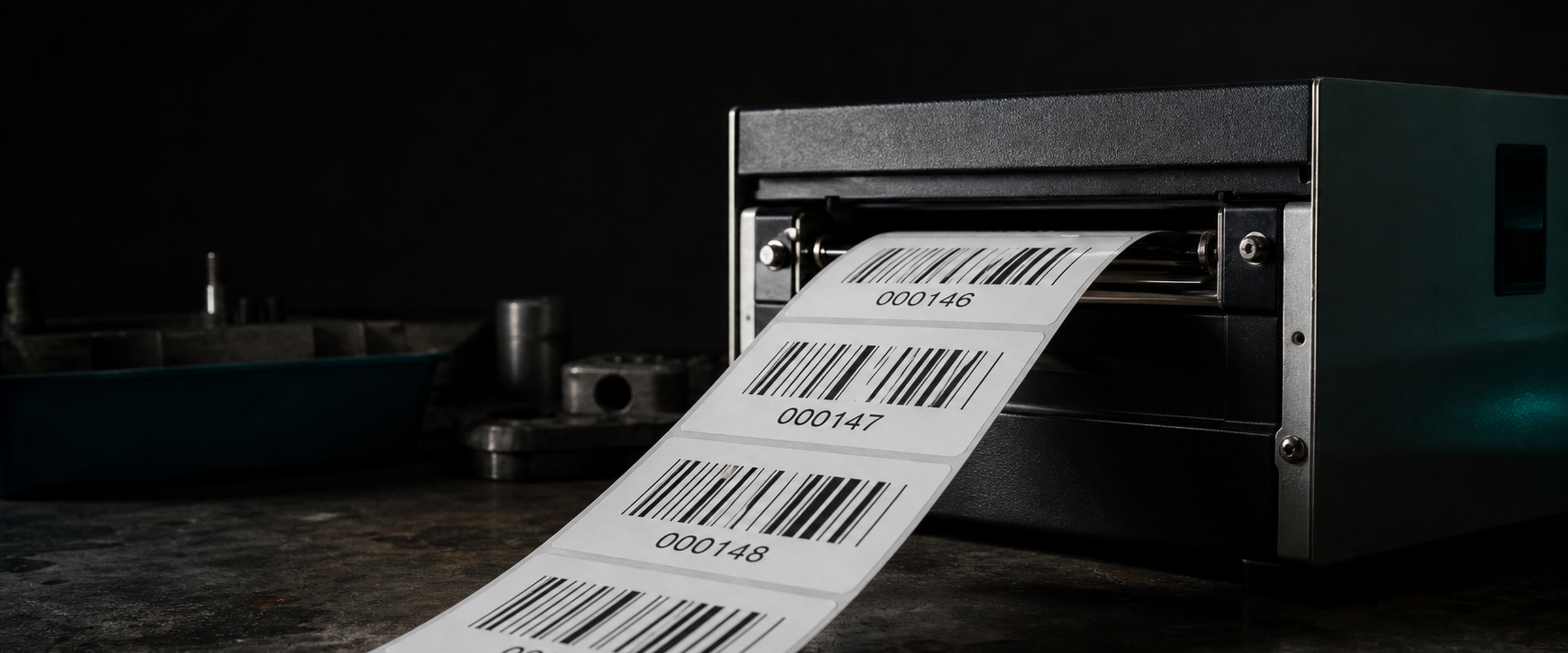
The roll keeps the order the file was in, and that changes how a reorder has to be worded.
A coded run prints in the order the values were supplied and stays in that order once it is wound. Three ordinary requests behave differently because of it.
A replacement is described by the first and last value that have to exist again. A quantity on its own does not say which labels are missing, so a reorder without a range turns into a search through the original file.
The number of labels ordered and the number of values supplied are the same number. Where they differ, the difference is settled in the file before anything is scheduled.
Where a run is delivered across more than one roll, each roll starts and ends on a known value, so a part delivery can still be reconciled against the file it came from.
A coded reorder moves fastest when it arrives as a range, because the range is the only thing that identifies the labels.
First-Off and Sample Checks Against Your Data File
The check has something physical to be checked against, which is the file itself.
The first label off a coded run is read back against the data that produced it: the value that should be there is the value that comes back, and the fields around it sit in the slots that were agreed. Sampling then continues at intervals as the roll grows.
That the file was read the way both ends agreed it would be, and that the values landed where the layout said they would.
That the run has stayed on the same values in the same places. Sampling is spaced through the run rather than run over every label.
A value that disagrees with the file stops the run at that point, and the question goes back to the data side before anything further is made.
Because the check has a reference, a disagreement can be placed on one side or the other straight away.
The Same Code on Matt, Gloss, Clear and Metallised Faces
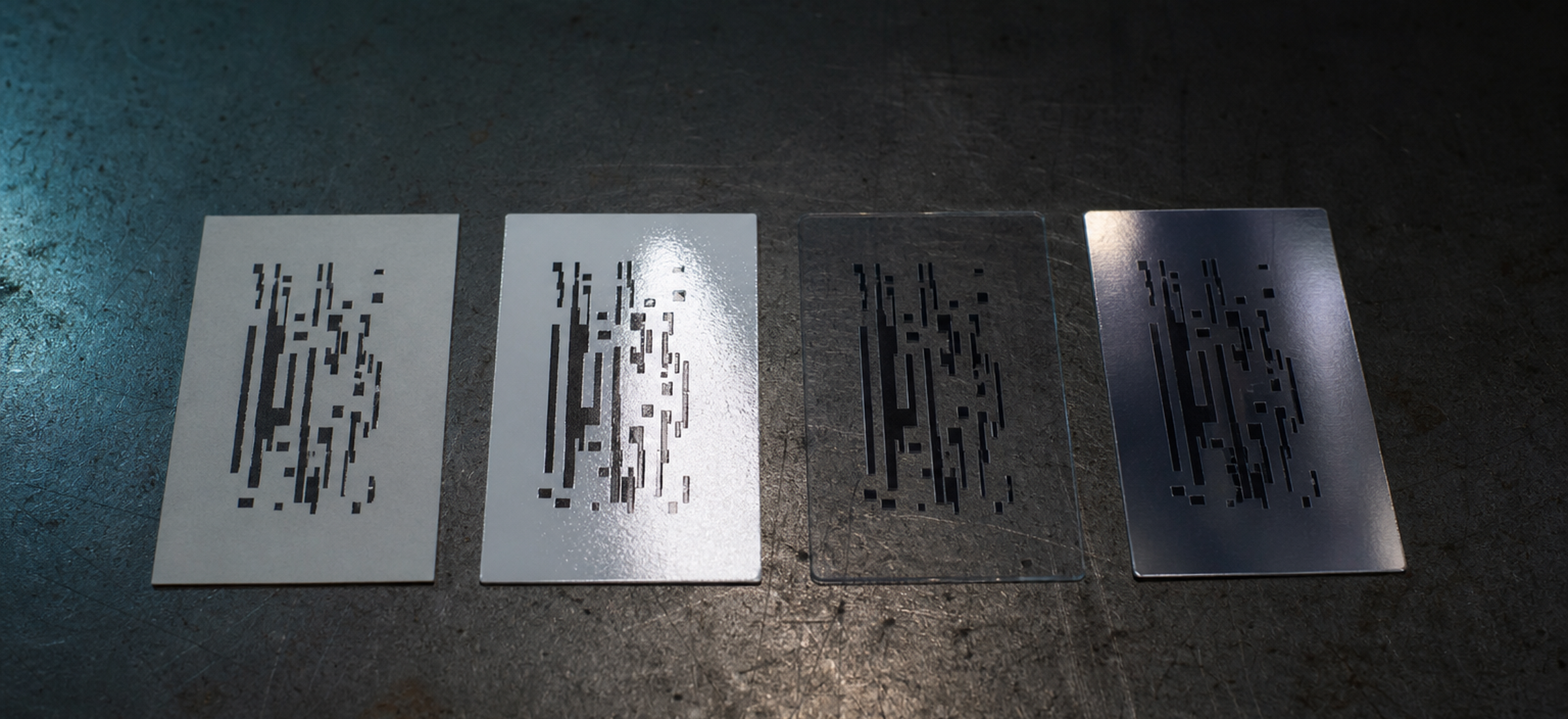
The code is identical on all of them. What reaches the reader is not.
A code is read as a difference between light and dark coming back off the label. Anything the surface does to that light happens before the reader gets a say, which is why the same artwork behaves differently once it is on a different face.
Matt paper and matt film
The surface scatters light evenly, so what comes back is close to what was printed. A code behaves most predictably here.
Gloss and gloss lamination
A polished surface returns light in one direction. Under a fixed overhead reader, or a phone with its flash on, part of the code can be washed out at some angles while the rest of the label looks perfect.
Clear film
The container behind it takes part in the reading. On a dark or patterned surface the background comes up through the code, and the contrast it is read by comes down with it.
Metallised and foil faces
A mirror-like surface returns a lot of light and returns it unevenly, so a code sitting on one, or beside one, is the first thing affected.
None of this is settled by description. A short printed sample on the face the job will actually use is what settles it, and it is worth doing while the run can still be changed.
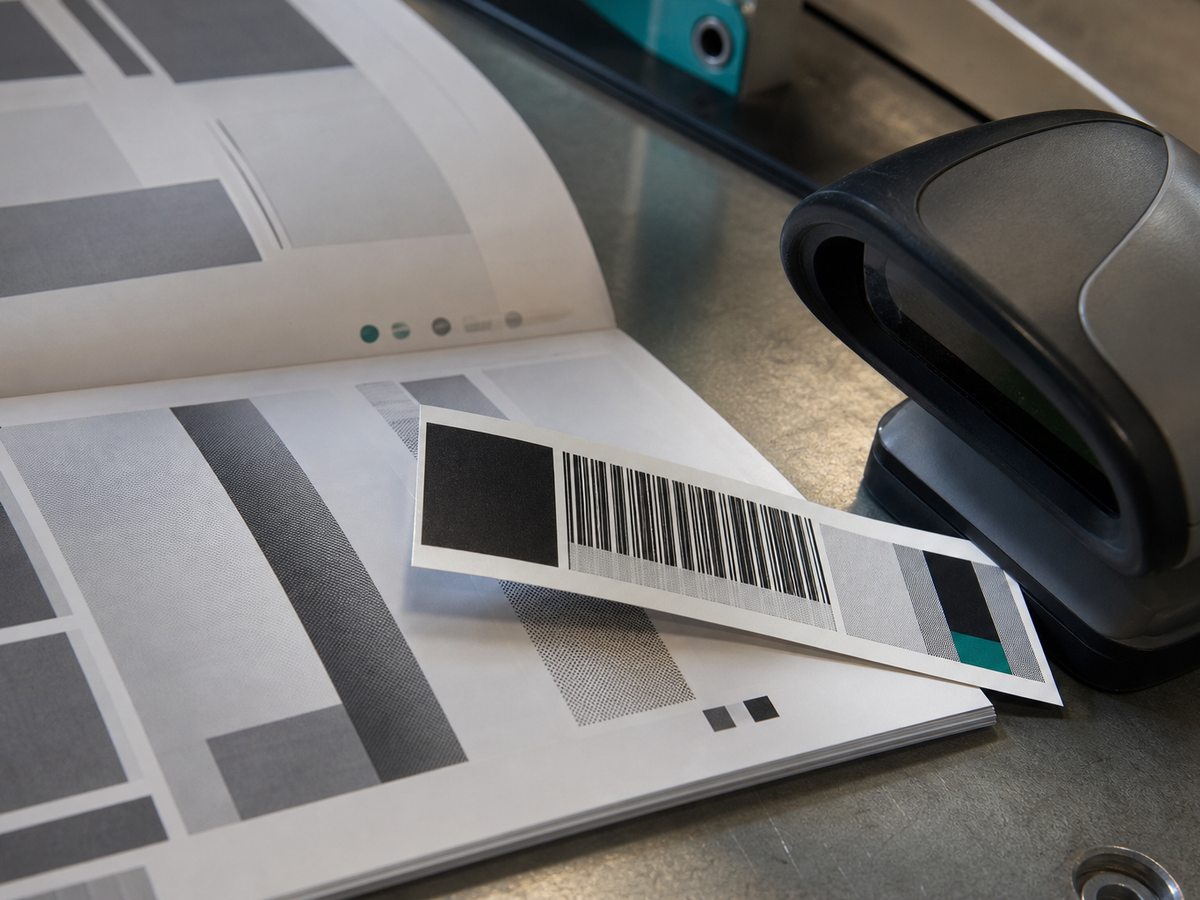
When a Code Will Not Read: What to Look at on the Label in Front of You
The label in hand usually shows which side the problem is on.
A code that will not read has already been printed, applied and put in front of a reader, and any of those can be where it went. Looking at the physical label first is what narrows it down, because the label usually carries a visible trace of whichever one it was.
Copy, a border or a rule has moved in tight against the code block. It reads as a layout that simply got fuller, and it is a common reason a code that used to read stops reading after an artwork update.
The block was scaled along with everything else when the label was resized or the copy grew. The artwork still looks correct at a glance; what changed is the size of the smallest printed element inside it.
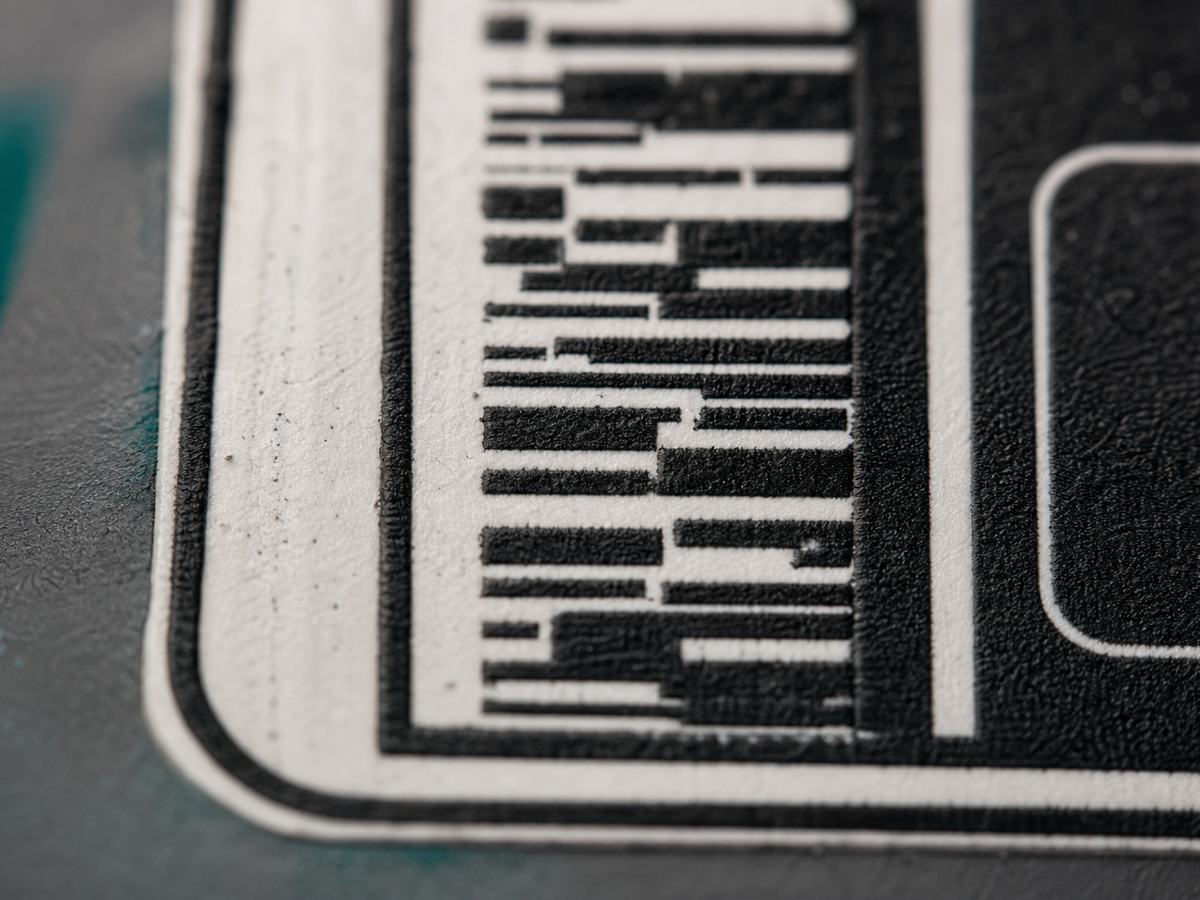
Bars that have gone grey and open, or bars that have run together at their edges. Either way the boundary the reader is looking for is no longer where the artwork put it.
Applied across a box edge, a seam or a tight curve, so part of the code is turned away from the reader and part of it is creased.
The band above covers this one: on a gloss or metallised face the same code can read at one angle and not at another.
Each of these is something a printed sample would have shown. Where a code has to work in a particular setting, the run is set up so a sample is read back before the rest of it is made, which is the stage these get caught at.
The dimensional rules behind the space a code needs around it, and how small its narrowest printed element can go, are set out with their figures in the code and variable data section of the overview.
Barcode Durability by What the Label Travels With
A code is chosen for the journey it is about to make, while nothing has gone wrong yet.
Durability on a coded job is a question about time rather than about the first scan. What the code is riding on, and how far that carries it, is what wears it down, so the journey is the thing worth naming at enquiry.
| What the codes travel with | What that journey takes out first | Which way the face and imaging lean |
|---|---|---|
| A shipment that goes out once and is read at the far end | Handling. Corners rub against whatever is stacked around them and against the belt, and the code still has to be intact when it arrives. | An ordinary paper face carries a single trip. The imaging side of this sits with the shipping roll range on wholesale thermal label rolls. |
| A location that is reached for again and again | Contact, over and over, in one place: reaching hands, passing stock, the edge of whatever is put back beside it. | Lean towards a coated or synthetic face where hands reach it. The imaging question is settled on the thermal roll side rather than here. |
| A machine, for as long as it stays in service | Cleaning and warmth. The code is wiped down along with the machine it sits on, and it heats and cools every time that machine runs. | Lean towards a synthetic face that holds its dimensions, with a laminate over the code where it is handled. Imaging leans to the long-life branch of the same range. |
| A pack that keeps going in and out of the cold | Moisture. Condensation arrives on the face every time the pack comes back out, and the label was often applied cold in the first place. | Lean towards a moisture-tolerant face. The adhesive side of cold application is chosen from the container, which the custom label build covers. |
The direction in a row is where a specification starts from. None of it is a service life. Where a journey is longer or rougher than the row assumes, the specification is settled against the real conditions when the job is quoted rather than from this table.
Location and Equipment Numbering: Read by Eye and by Scanner on One Label
The same label has to work for someone standing back in the aisle and for a reader held right against it.
Numbering for locations, pallets and equipment is written once and then lived with for years, which makes it a different kind of job from a code printed for a single journey. The same label is read by a person finding the right bay and by a scanner confirming it, and each of them needs something the other does not.
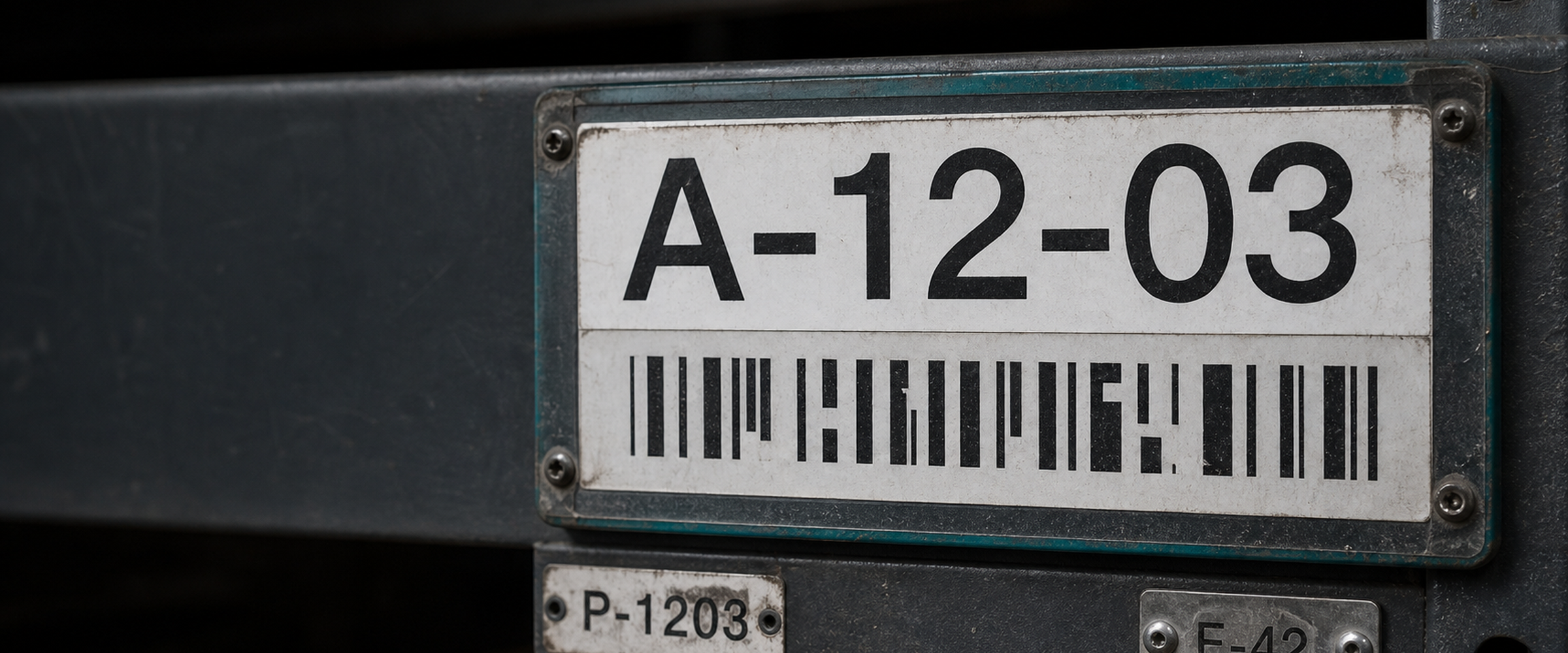
Large, high-contrast characters carrying the whole location: the aisle, the bay, the level. This is what gets read from the far end of an aisle, so it is sized for distance and the rest of the label is laid out around it.
The same value, encoded, placed where a handheld naturally comes to rest, carrying the identifier the system stores.
Segments read left to right, each one a level of the structure, so a number can be read part way and still place the item. Segment lengths are fixed at the outset, because widening one of them later re-labels everything already out there.
A numbering scheme has to survive the next reconfiguration. Aisles get added and racking gets moved, and a scheme with no spare range left in it gets re-issued instead of extended.
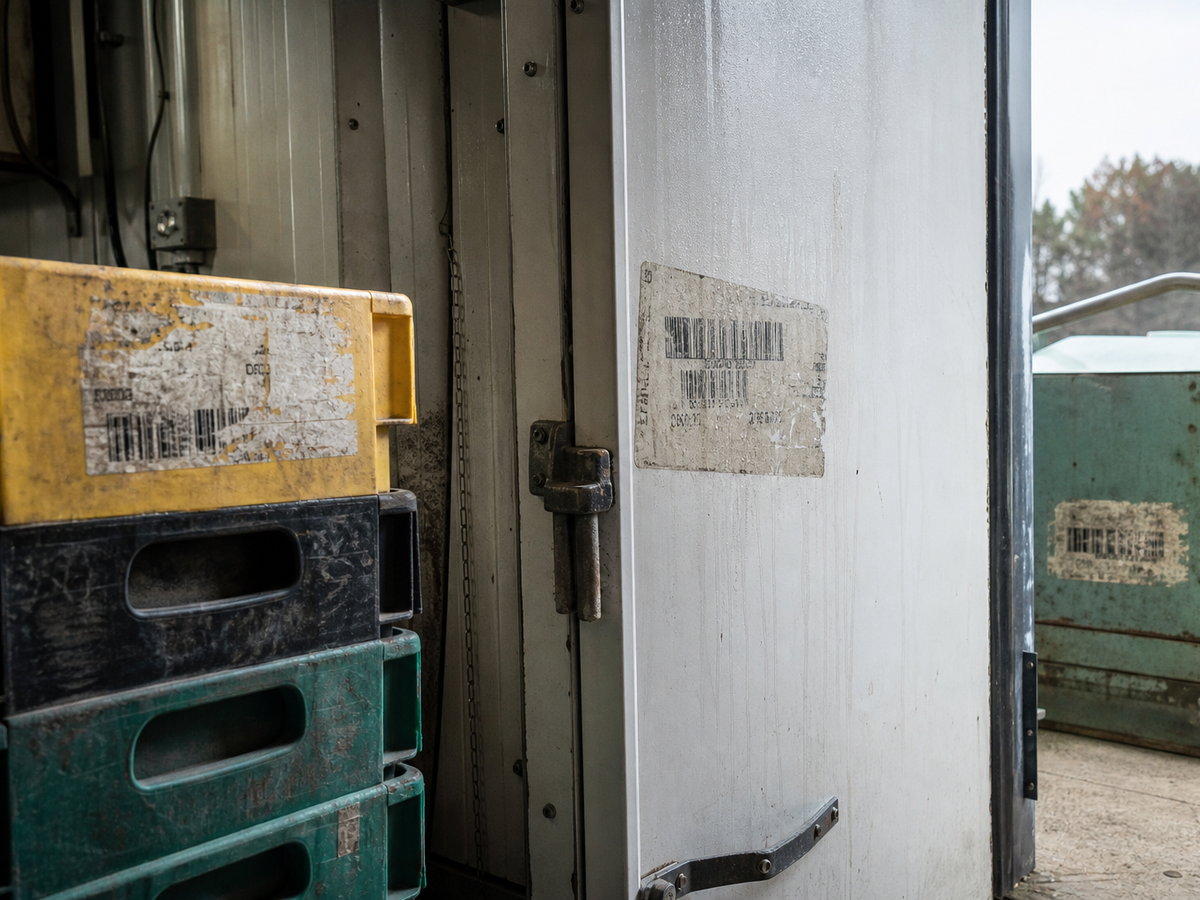
The label stays with the item for as long as the item is in service, gets cleaned along with it, and has to stay legible both to a person doing a physical check and to whatever reads it into the register. That puts it with the codes that live on something for years rather than with the ones printed for a trip.
A scheme worth printing is one that will still place an item after the next reconfiguration.
Which Line a Coded Job Belongs To
Coded work sits alongside the roll supply rather than inside it.
Barcode Label Quotes and Variable Data Runs
What a coded run needs before a price can come back.
Say who or what is going to read the codes, whether the values already exist in a file, what the labels are going to be travelling with, and how many labels this run comes to at what size. That is enough to come back with a price and with whatever is still open asked in one go, instead of a chain of separate questions. The data file itself does not go in the box below. Once this is in, send it separately to [email protected].
Where a coded job runs alongside other label work, the whole specification can go in one go through the complete sourcing enquiry form.