Thermal Labels: Which Roll Your Machine Takes
One question sits in front of every other one, and the printer on your bench has already answered it.
Thermal labels come off two different constructions, and a roll built for one of them will not image on the other. A printer that carries a ribbon needs stock that takes a ribbon. A printer without one needs stock that darkens on its own. Everything below follows from which of those is sitting on your bench.
Which Branch Your Machine Puts You On
Two constructions, and the machine picks for you.
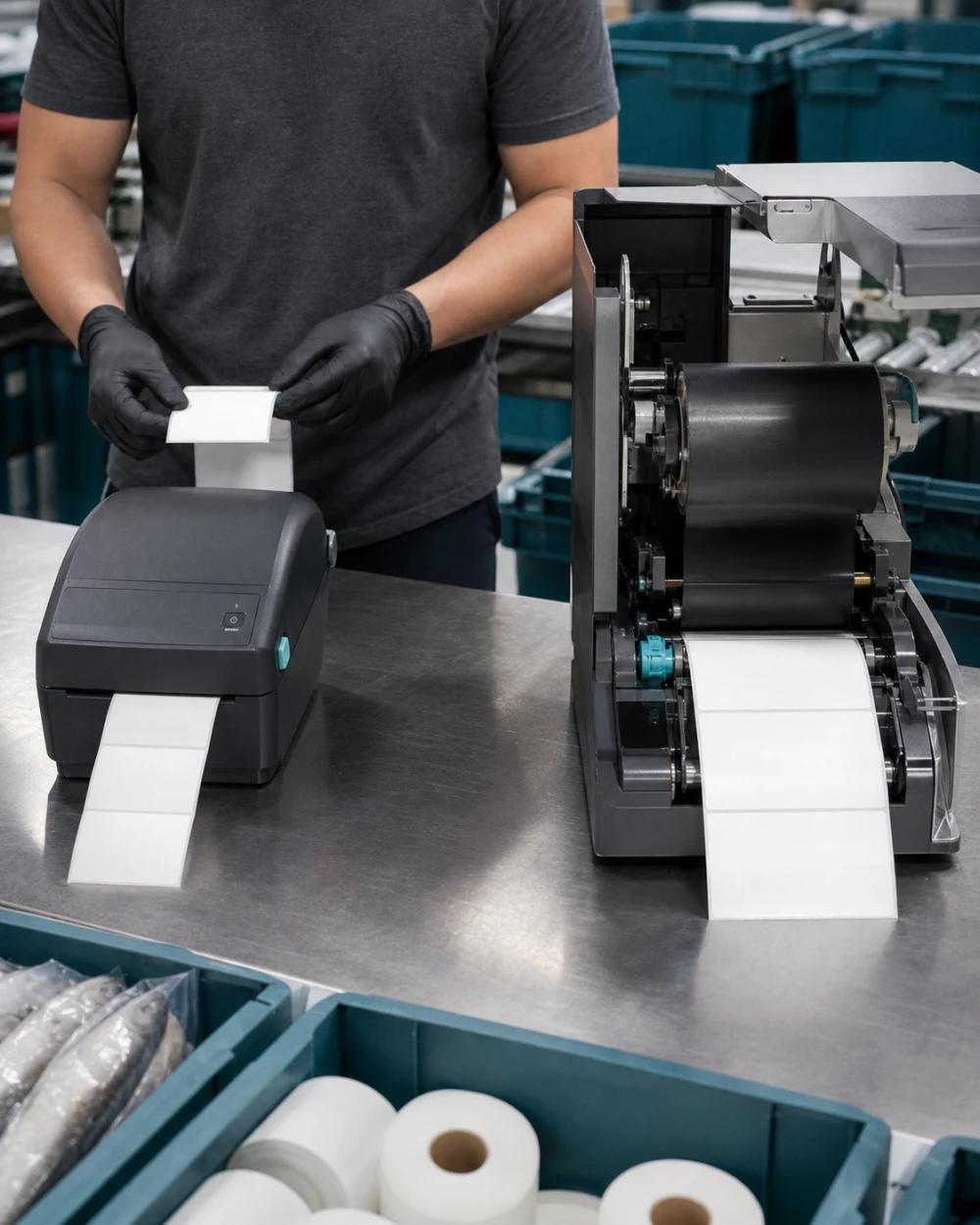
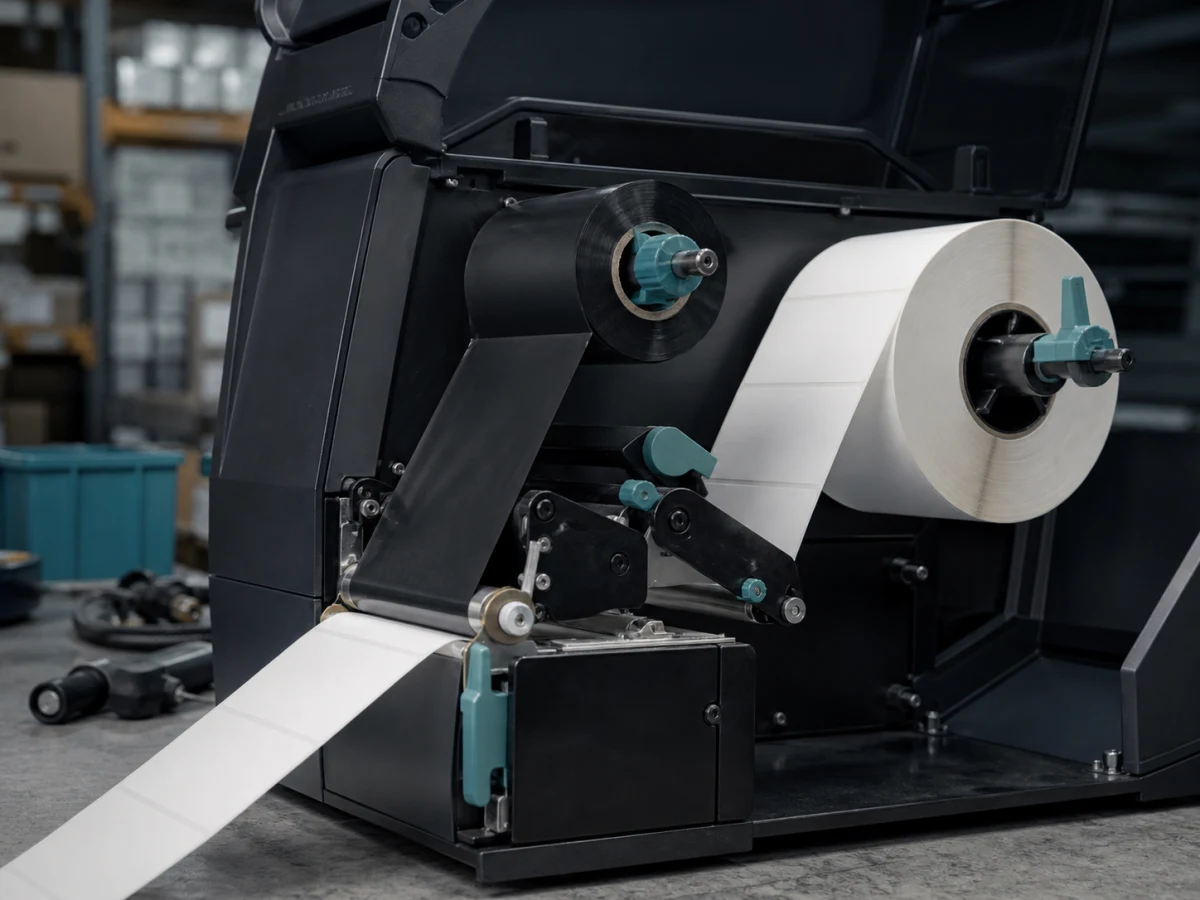
Look at whether the machine takes a ribbon. That is visible without a manual: a ribbon carriage is a second spindle, and a machine that has one is idle without it loaded.
No ribbon carriage
Your stock has to carry the image chemistry itself. That branch is covered below under stock that darkens on its own.
Ribbon carriage fitted
Your stock is a receiving surface and the ribbon does the imaging. Which ribbon depends on the facestock, and that pairing is covered under the ribbon branch below.
Machines that will run either way exist, and for those the choice moves to what the label has to survive, which is the table in the next section.
Thermal Labels by Use and Exposure
Read across from what the label is for.
| What the label is for | Where it ends up | Method it points to |
|---|---|---|
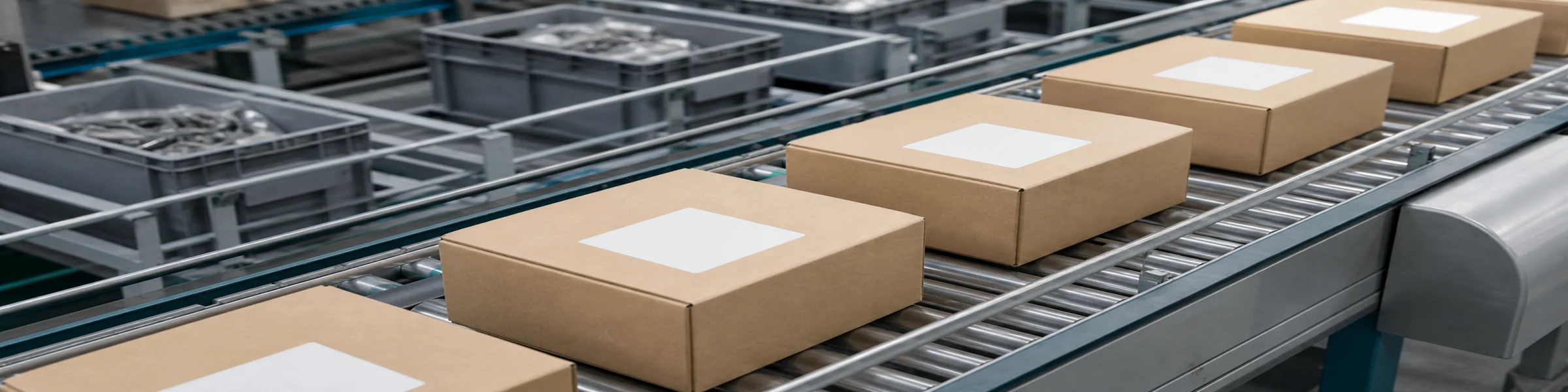
| Courier and parcel labels | Handled, scanned, read once and discarded | Stock that darkens on its own |
| Picking and putaway | Indoors, read repeatedly over a shift | Either, depending on handling |
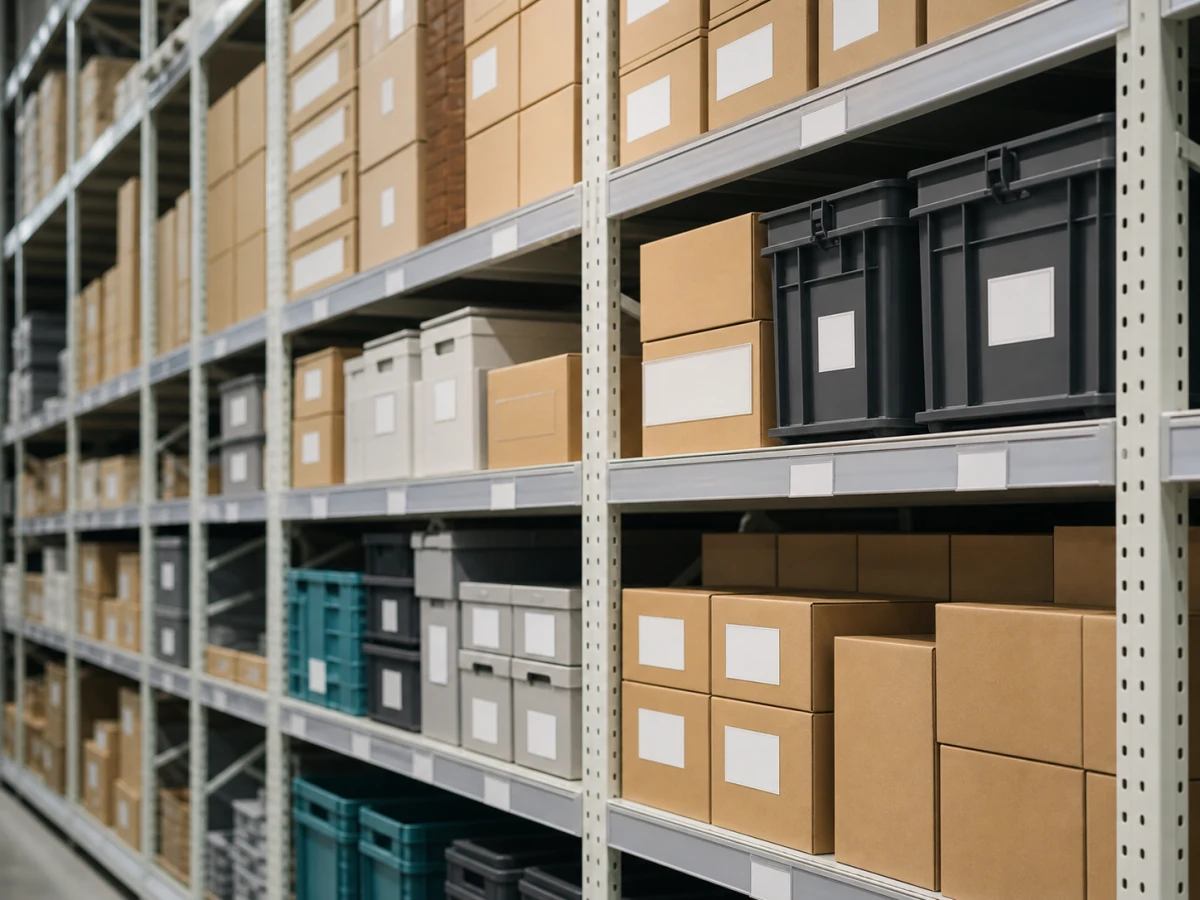
| Shelf and bin marking | Indoors, stays put and gets read for as long as the bin does | Ribbon-printed |
| Carton and pallet marking | Warehouse to warehouse, rubbed in transit | Ribbon-printed |
| Asset and equipment marking | Stays with the item, handled and cleaned | Ribbon-printed |
| Anything held long or kept outdoors | Light, warmth and abrasion all act on it | Ribbon-printed, and the facestock matters as much as the ribbon |
Every row above is a starting point, not a rating. How long any thermal label stays readable depends on the use and the storage conditions, so the last column says which method to start from and the selection gets settled against your own case.
Stock That Darkens on Its Own
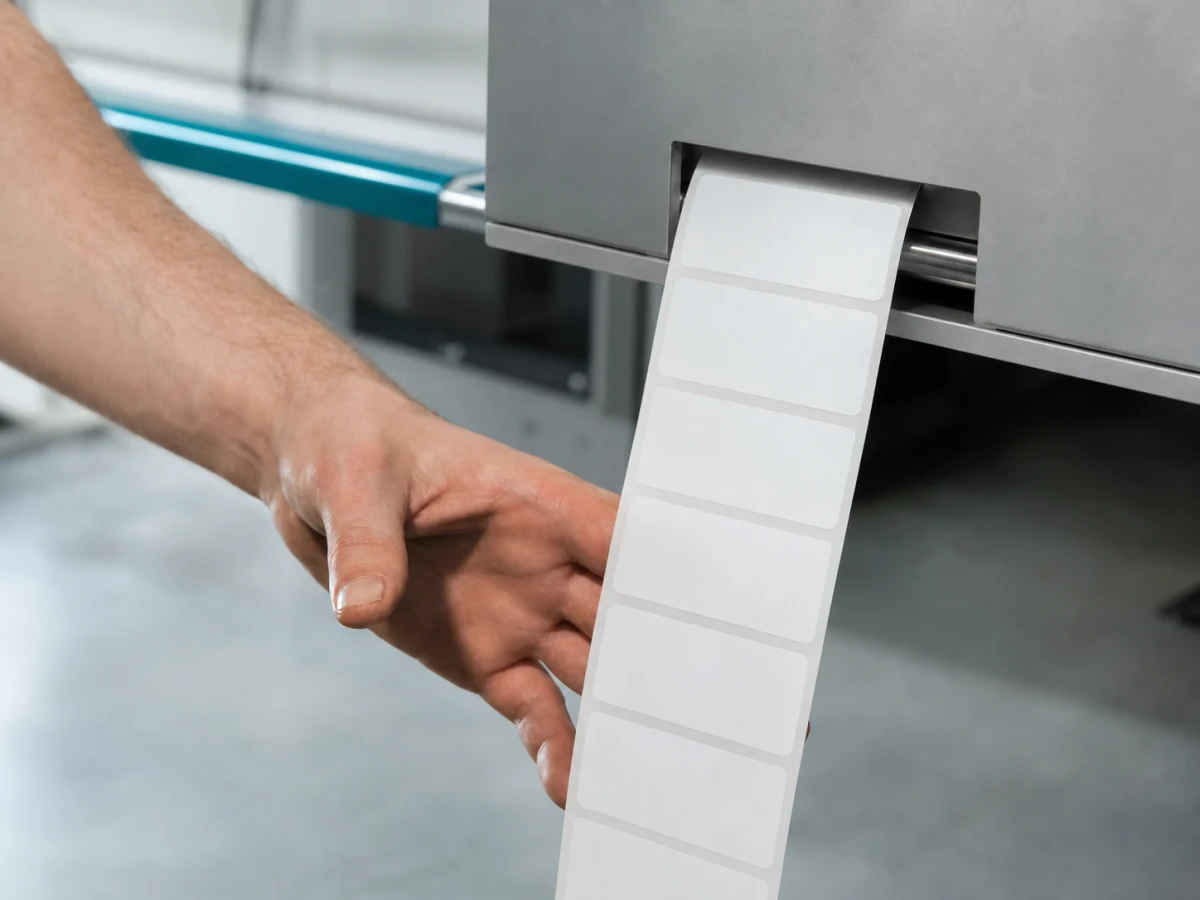
One consumable to reorder, and the image is already in the facestock. The coating reacts to the heat coming off the printhead, so nothing else has to be loaded and nothing else runs out mid-shift.
The same sensitivity is what limits it. A coating that darkens under a printhead also darkens under other warmth, under daylight over time, and under rubbing. That is a property of the construction rather than a defect, which is why the uses in the table that point here are the ones where the label is read and then done with.
Where a label has to still be legible after a season in a rack, this branch is the wrong start and the ribbon branch below is the right one.
The Ribbon Branch, and Matching Ribbon to Facestock
Two consumables, and they get ordered together.
Here the facestock is a receiving surface and the ribbon carries the image onto it. Two things now deplete instead of one, at different rates, and reordering one without the other is the usual way a line stops.
The pairing matters more than either part alone. A ribbon laid onto a stock it was not meant for scuffs off under a thumbnail, and the failure shows up after the labels are already applied.
Which of the three your job takes is decided together with the facestock, so send both requirements at once rather than picking a ribbon first.
Winding Direction and How the Printer Finds the Gap
Two settings that decide whether a correct roll still runs.
A roll can be right on size, right on stock and still jam or print upside down, and it is nearly always one of two things.
Winding direction
Labels can face outward or inward on the roll, and the printed side can lead or trail. That gives four ways to wind the same label, and a machine that feeds one way will pull a blank face past the printhead on another.
Desktop machines and industrial machines commonly differ here, which is why a roll that ran on the old printer can stop running when the printer is replaced.
How the printer finds the gap
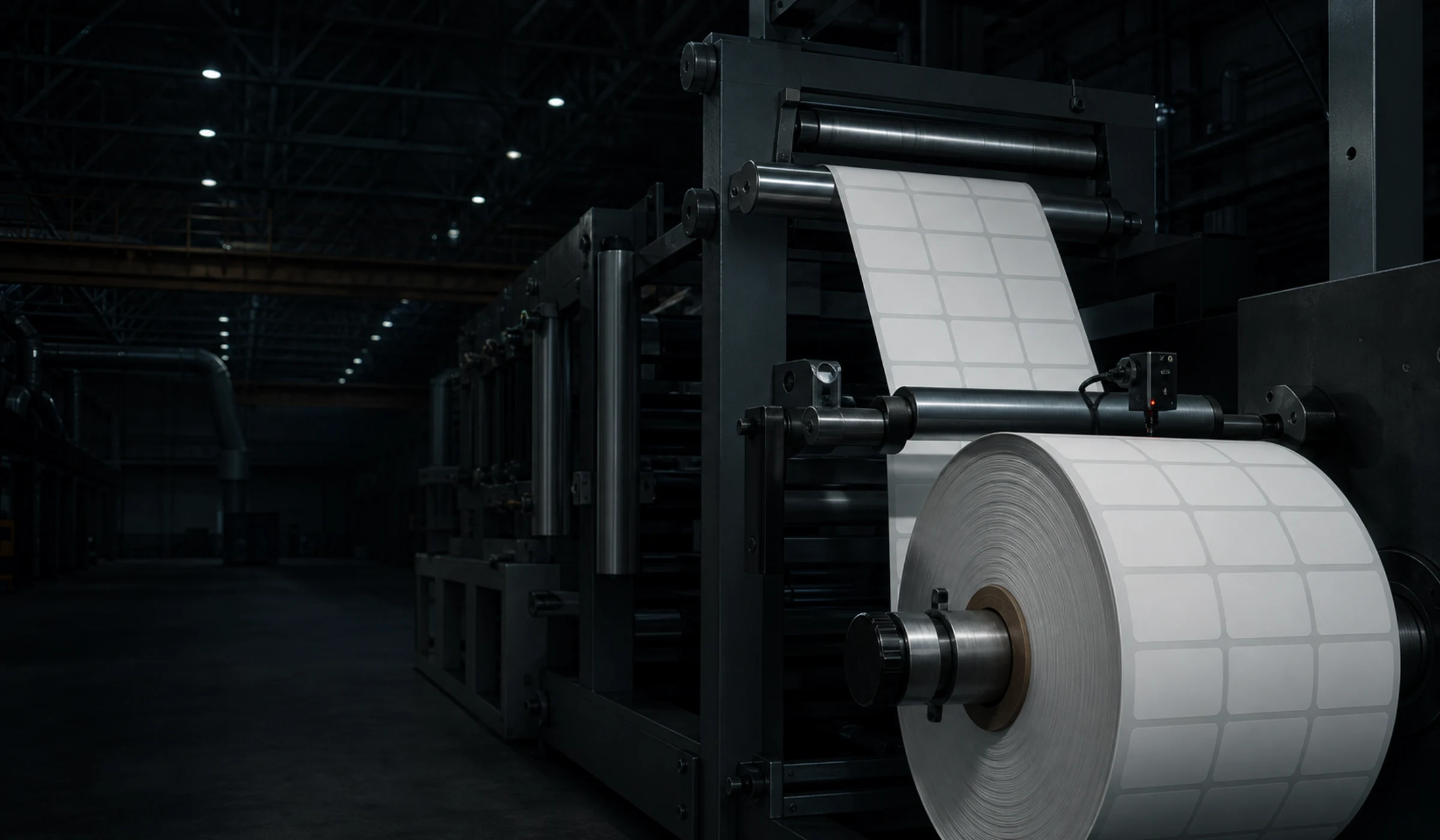
The printer also has to know where one label ends. It either sees daylight through the gap between labels, or reads a mark printed on the liner, or is told a fixed length because the stock is continuous.
A machine set to look for a gap will run right past a roll that carries a mark instead.
Both settings are on the printer and on the roll, and they have to agree, so tell us the machine and we set the roll to it rather than sending a default and hoping.
Blank Rolls or Printed by Us
Same stock, two different routes to an order.
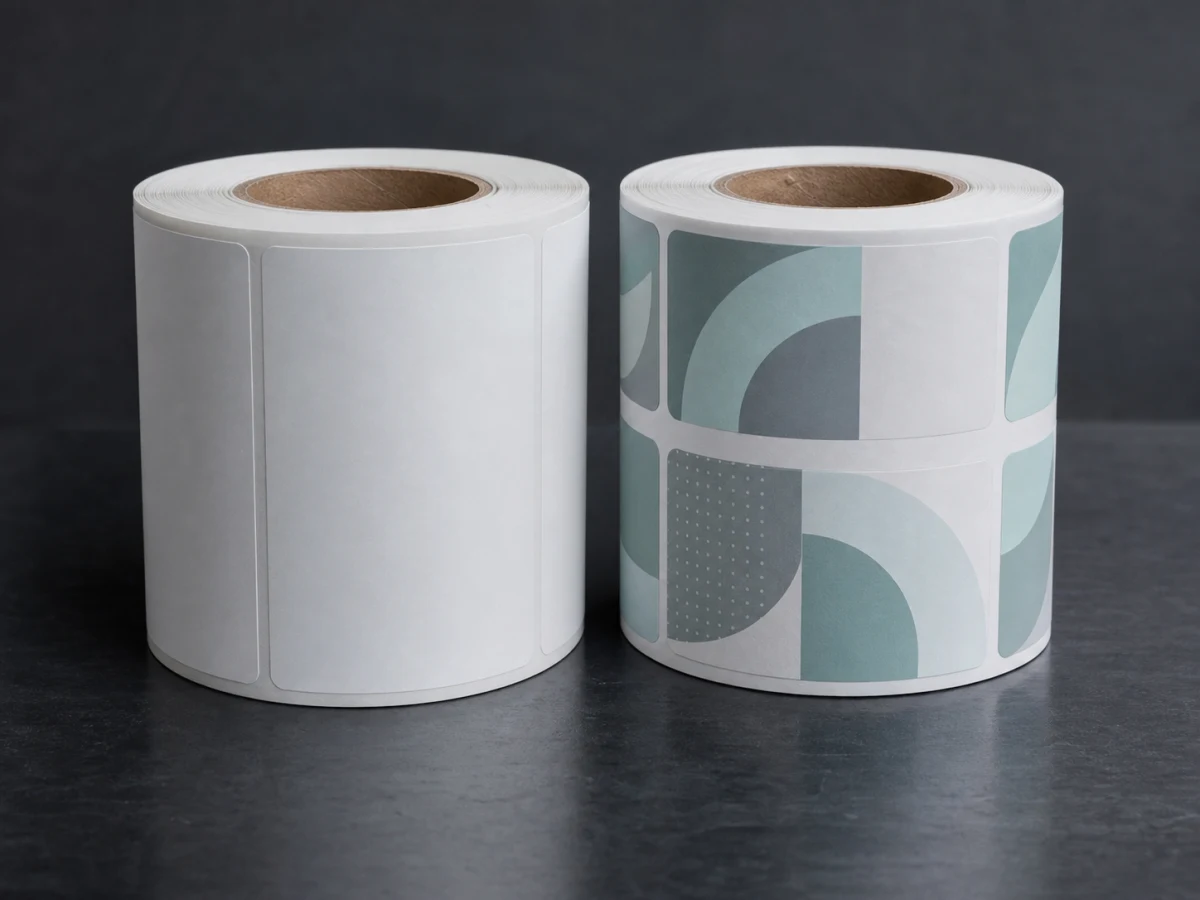
Blank rolls
Nothing of yours goes onto the roll before it ships, so the specification is the stock, the size and the winding, and the order can be settled on those alone. You do the imaging on your own machine, which is also why the winding and sensing above have to be right first time.
Printed by us
Artwork enters the process, and with it a step where you confirm what you are getting before the run goes ahead. That step is what the schedule hangs on, and it is the reason the two routes are not quoted the same way.
Both are quoted from this page. Order minimums and lead times are counted differently on each route, and both are set out on the wholesale label and roll supply overview.
What the Label Has to Stick To
The surface decides as much as the printer does.
A label that images perfectly can still lift off the thing it was put on. The facestock answers to the printer; the adhesive answers to the surface, and those two get chosen together rather than in sequence.
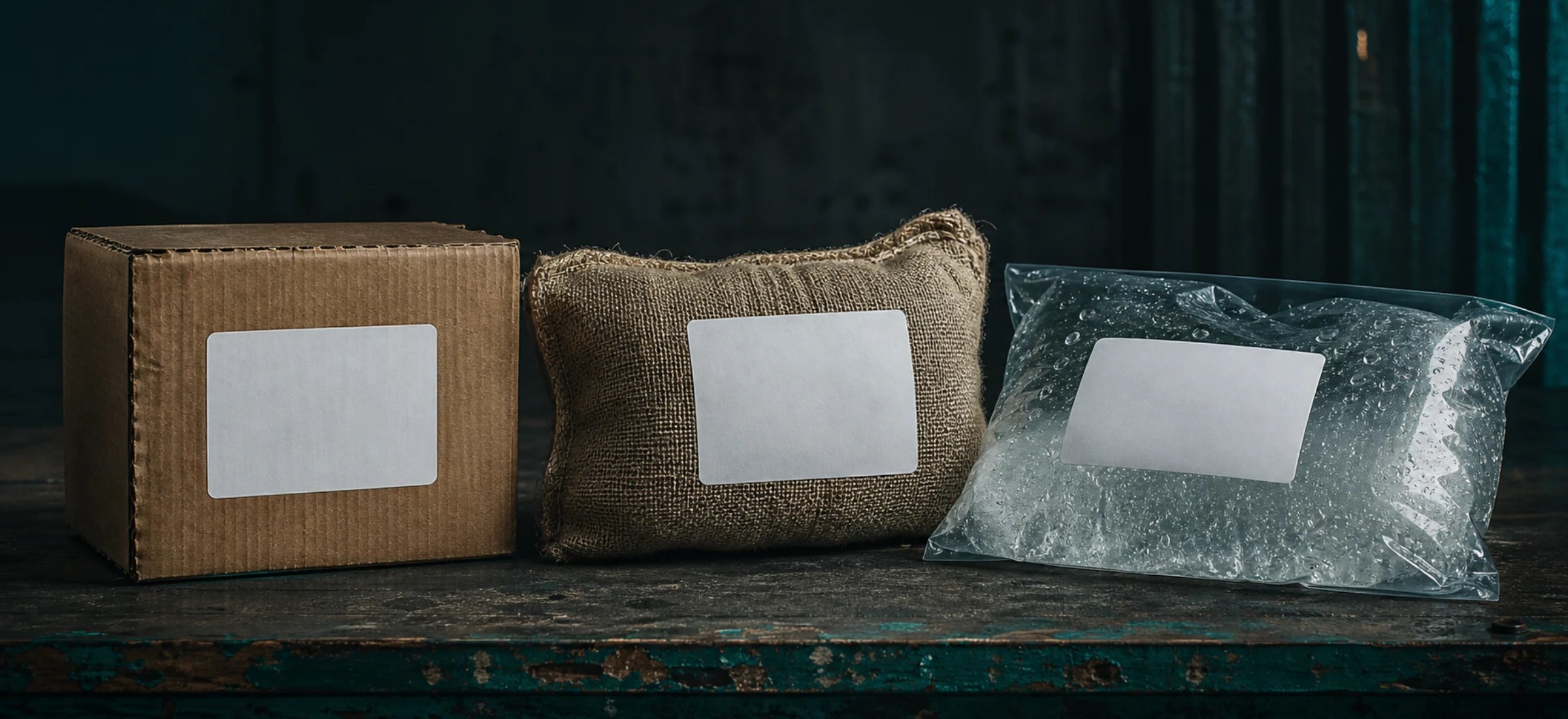
Corrugated cartons
An absorbent, dusty surface with a printed liner under it. Flat panels hold well; the trouble starts on tape seams and on the crushed edges of a re-used box.
Woven sacks and bags
A coarse weave that touches an adhesive at far fewer points than a flat face does, and one that flexes every time the sack is moved.
Films and cold packaging
A slick surface, often with condensation on it, and often labelled below room temperature. Applying a label onto a surface that is already cold is a different requirement from one that is labelled warm and then chilled.
Where a surface falls outside what a standard thermal label stock is built for, the facestock and the adhesive get picked as a pair on the custom line rather than substituted on this one, and the sales team says which of the two routes your surface belongs on before anything is quoted.
Before the Roll Goes on the Machine
What to check on your side, before a box gets opened.
Machine class
Whether it carries a ribbon. Getting this wrong is the one that cannot be worked around: the wrong construction prints blank, and an opened case is hard to send back.
Winding and sensing
The two settings from above. Getting these wrong looks like a jam or an offset print, and it is recoverable on a single roll but not on a pallet of them.
Facestock against the use
Whether what the label has to survive matches the branch you ordered from. This one does not show up on day one; it shows up when the label is read again later.
None of these need a technician to check, and all of them are answerable from the printer model and where the labels end up.
Trying a Roll Before Switching Supply
Changing where the rolls come from is not really a paper decision, it is a machine decision, and the only place it gets settled is on your own printer.
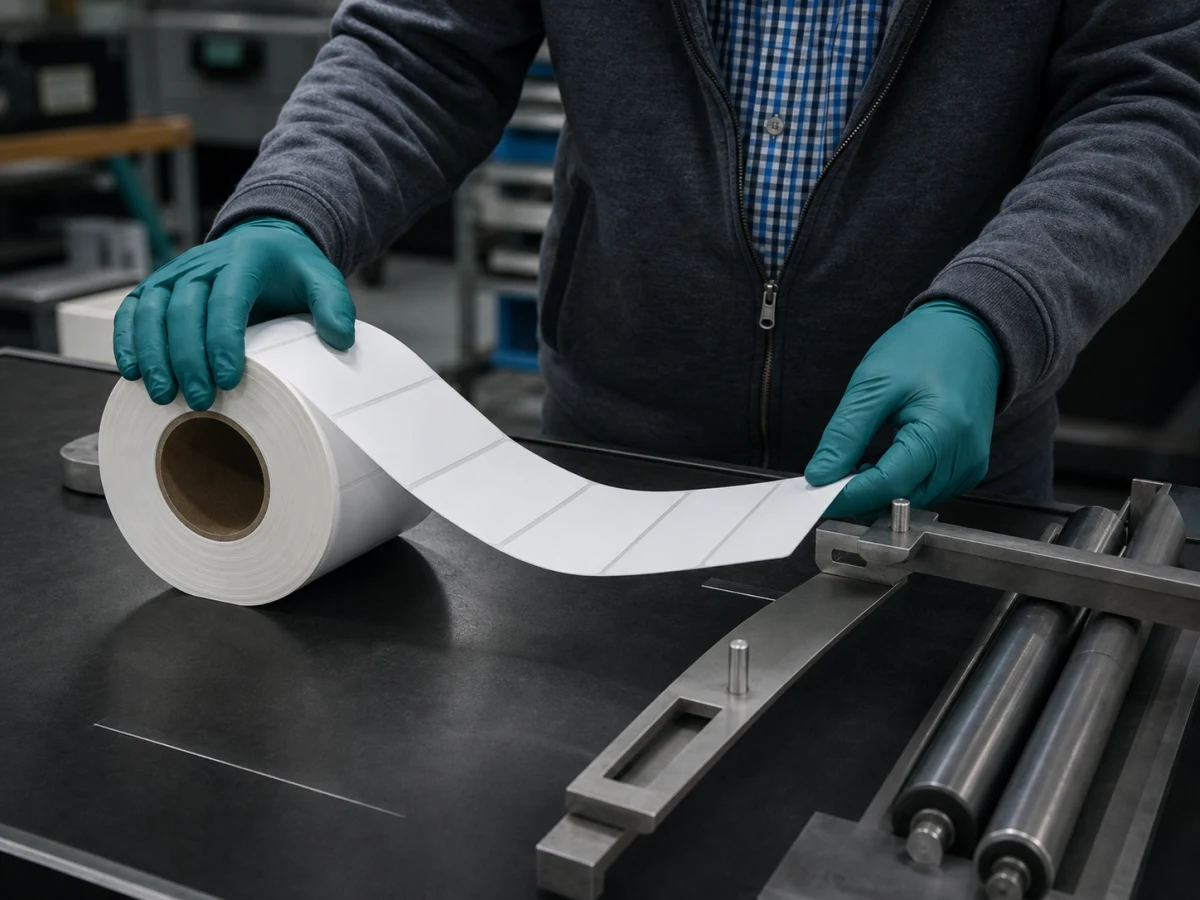
Ask for a single roll and run it through the machine that will be running the production. Watch the feed rather than the print: whether it tracks straight, whether the sensor finds every gap, whether the print lands in the same place on the hundredth label as on the first. A roll that images correctly and drifts across the web will still be a problem at volume.
On the roll lines a sample means one roll rather than a case, and the courier is billed to you or collected on your own account.
What This Line Covers, and Where the Rest Goes
The boundary, so nothing gets ordered off the wrong page.
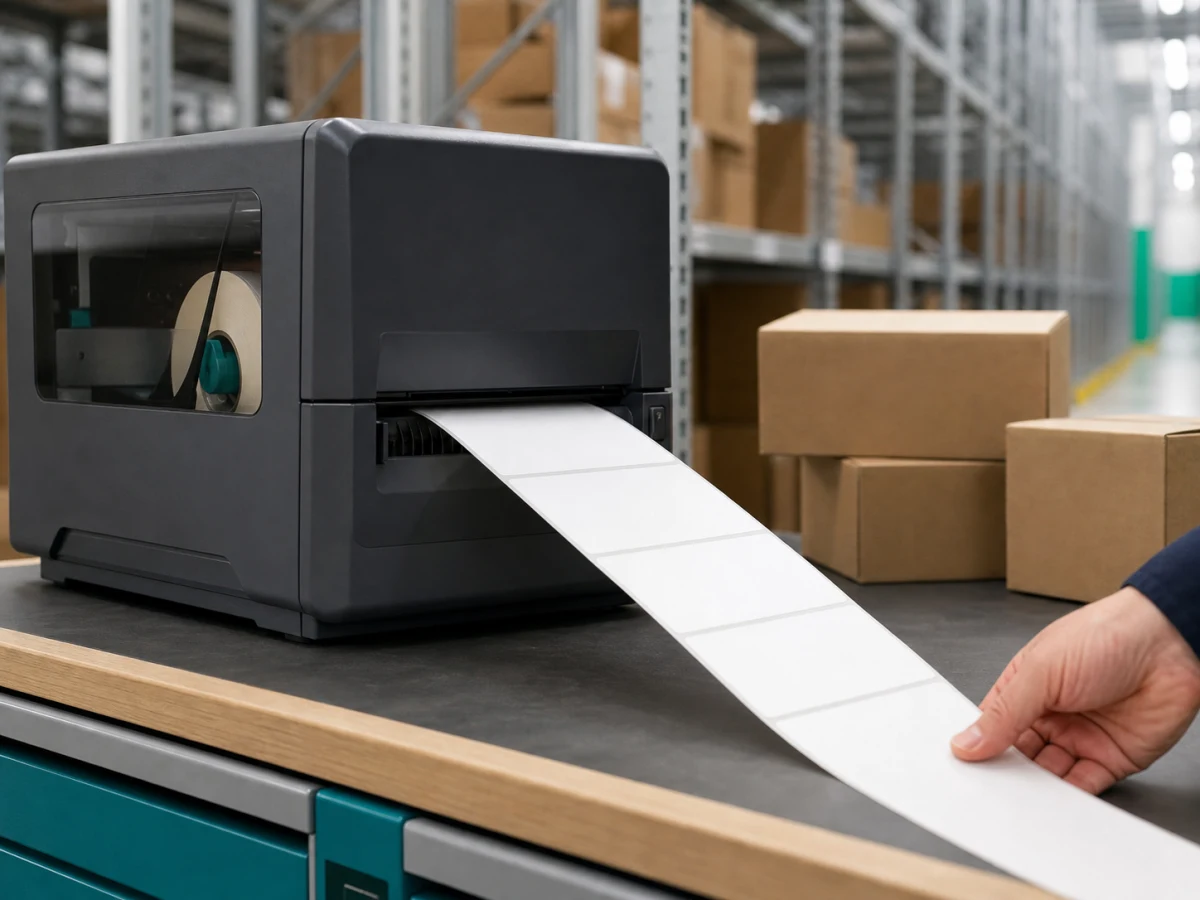
Label rolls for thermal machines, blank or printed, on both constructions above.
Paper rolls for point-of-sale terminals rather than labels. Different line, and the wear and imaging questions on it are not the ones on this page.
The ribbon branch has its own page where the pairings are worked through properly, ribbons included.
The common face-label sizes are handled where those sizes are the subject rather than one row of a table.
Whether the printed result reads reliably belongs with the code work, not with the stock. It is answered by a barcode label manufacturer.
Anything where the shape or the surface treatment is the point goes to the custom line.
Send the Machine and the Quantity
Enough to price a roll against your printer.
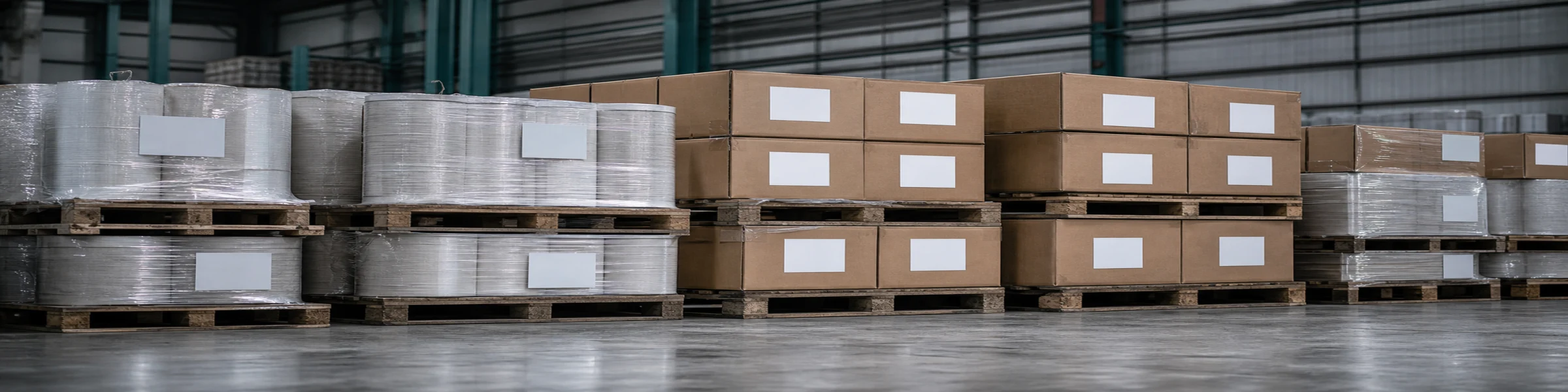
Put the printer model and how many you get through in the message box. Those two are what a roll gets priced against, and with them the reply can name a construction instead of asking which one you meant.
Sizes, winding, artwork and the rest of a full specification are collected in one pass on the full quote request form for a wholesale thermal label supplier.