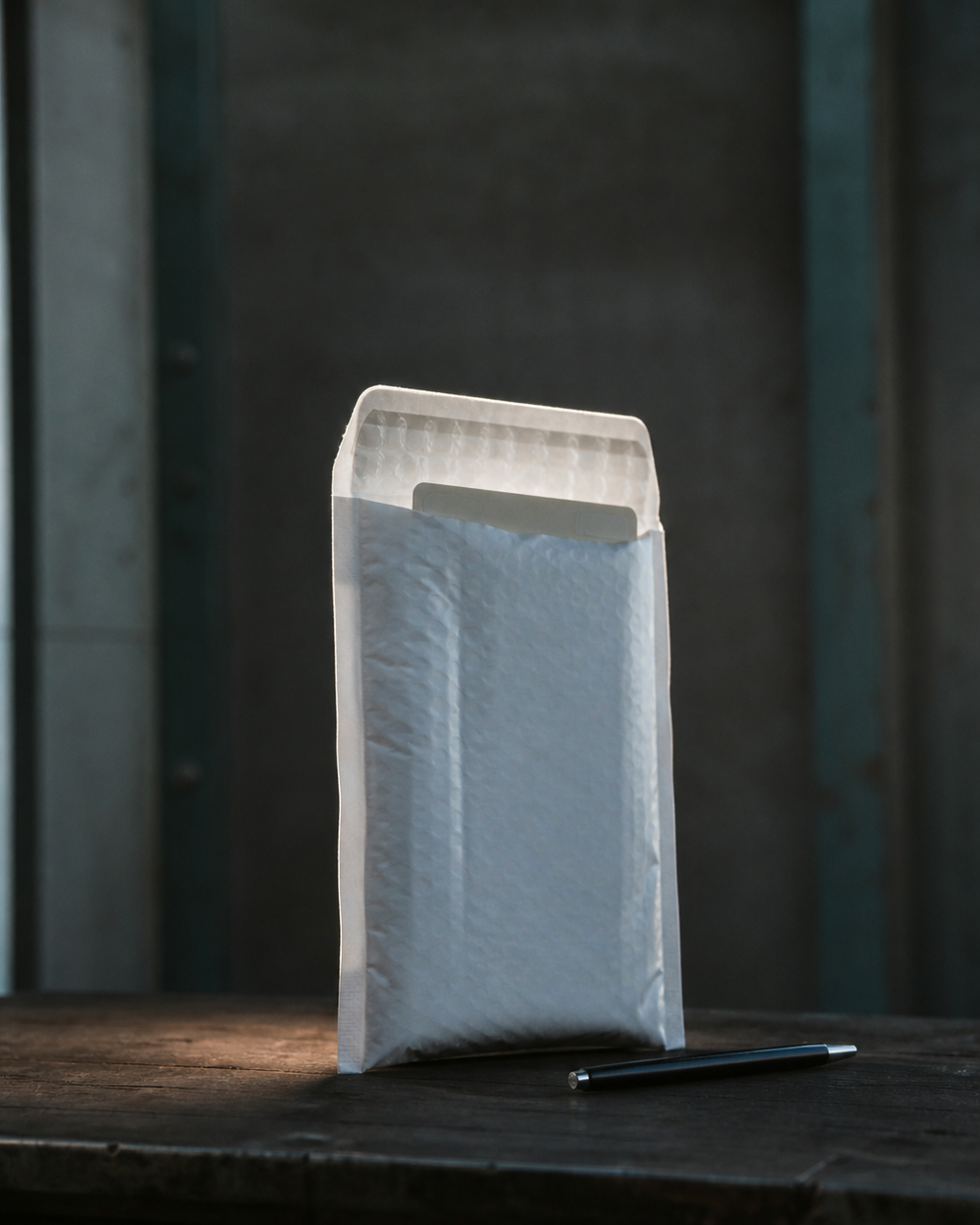
Cold
A face built to be weak gets weaker as the temperature drops, so a label that behaves on the packing bench can give way during ordinary handling in a chilled chain. That is a specification question, and it is settled at order time.
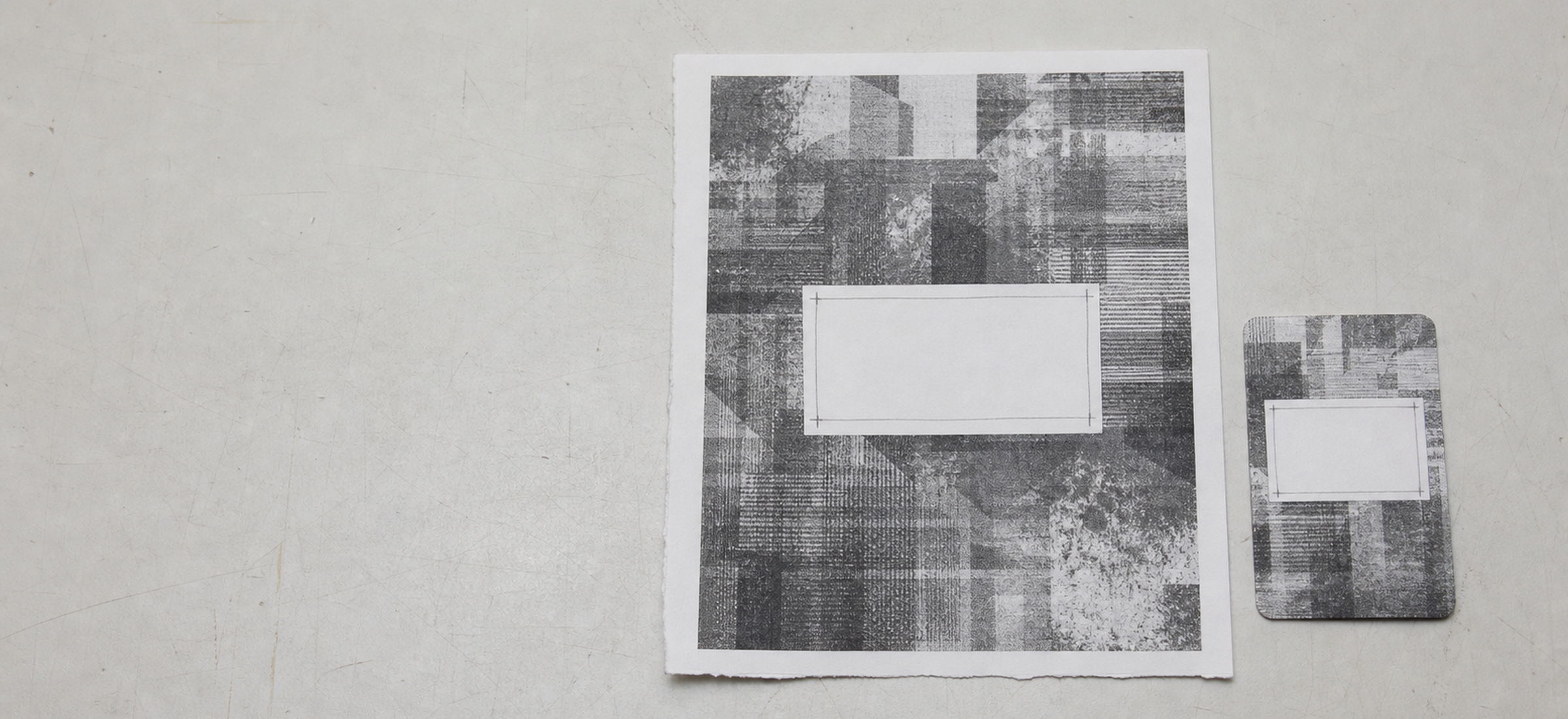
An inlay goes in, and the layout, the outline and the roll each give something up to make space for it.
An RFID label is an ordinary label with one more layer in it. That layer claims a fixed area of the face and will not move, so the artwork, the cutting line and the finishes are all drawn around it. Most of what has to be settled before an order goes in comes out of that one fact.
One component, in one fixed position, for the whole run.
What each construction asks of you in return, before any of it reaches artwork.
Each construction asks for something back, and part of what it asks comes out of the layout. What the table sets out is that cost — what has to be settled up front, and how far back a change reaches once the run has started. What each construction is, and which face it works on, belongs with the overview.
| Construction | What has to be settled before it can run | What the layout gives up |
|---|---|---|
| An inlay in the label | Where the component sits on the face, and the reading side already installed at the destination. Both are fixed before artwork is approved, and moving either one afterwards means a new die. | A fixed area no field can use, running the length the component occupies. |
| A destructible face | The surface, the temperature it lives at and the journey it takes — the conditions under which this face behaves as specified are narrow, and a sample has to be made against the real ones. | A face chosen for weakness, which narrows the curves it will sit on and the finishes it will take. |
| A tamper-evident construction | Which face the specification puts the evidence on, and whether the receiving end is set up to look there. That is an order decision, not a default, and it is settled with you before quoting. | A bond written against the face, which limits what the face can be. |
| A holographic face | Where the pattern falls under the artwork, because it is part of the face being printed on and cannot be planned around later in the run. | Printable area given over to the pattern, and fine type kept off the brightest part of it. |
None of this is decided at the label on its own. Each row is a trade made against the container it goes onto, the line it runs on, and artwork that is usually already drawn.
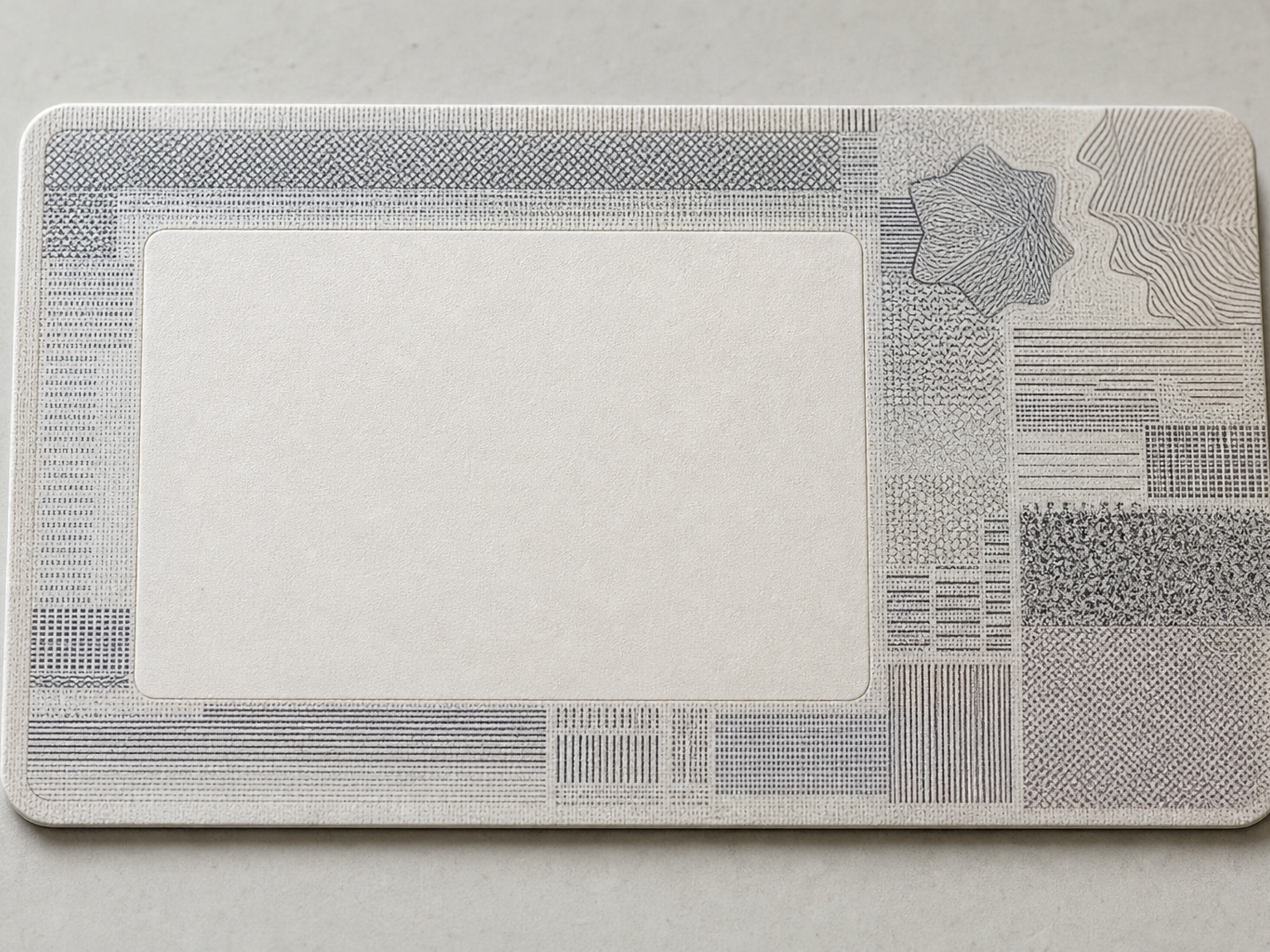
How big it is, and where it falls, is not a design decision.
An inlay occupies a run of the label, and the component sets that run, not the page. Copy, codes and any variable field are all placed clear of it. Nothing in the artwork negotiates it down, because it follows from the component, and the component is settled before the layout is.
Artwork sent to us is checked against that clearance before any of it is quoted as printable. Where something fouls the area, you get told which element and which edge, and what has to move for it to clear. Making that move is a layout call, and it happens before the artwork comes back for re-checking.
What the clearance does to the shape itself
Artwork requirements are set out on the make-ready overview.
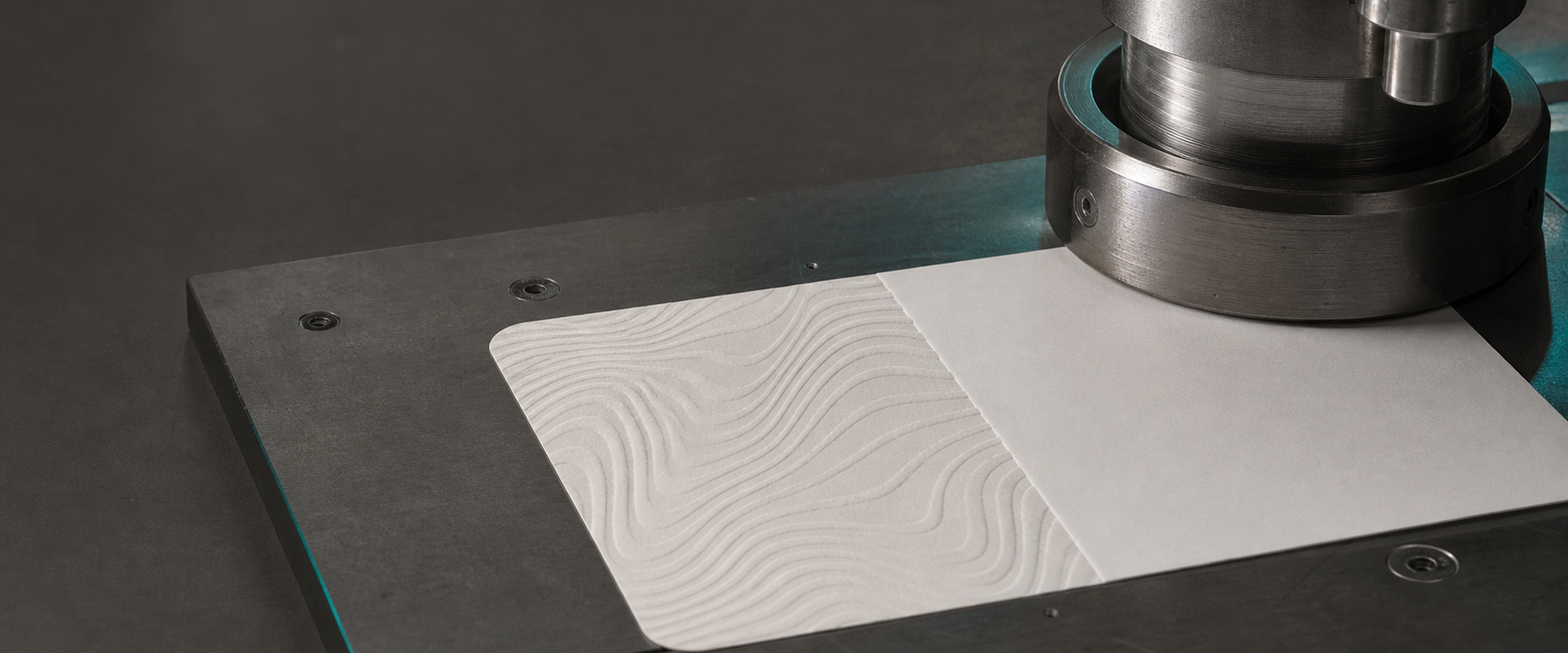
A finish is applied to the label, not to the whole of it.
Embossing and debossing work by forcing the face into a die, and that force has nowhere to go over the component, so the relief stops short of the clearance rather than running across it.
Foil and metallised faces raise a placement question instead. Where they fall against that area is settled with us while the artwork is being drawn, not after it has been approved.
Heavy spot varnish stacks up and behaves the same way as relief does. Punched holes and hanging slots are the plainest case of all: they are placed against the clearance first and against the outline second, which is the reverse of how they are usually specified.
What each finish asks of a face in general sits with the finishes overview. What belongs here is only where each one has to stop.
Stacks up over the run, and behaves the way relief does.
A placement question, settled while the artwork is being drawn.
The force has nowhere to go over the component, so the relief stops short of the clearance.
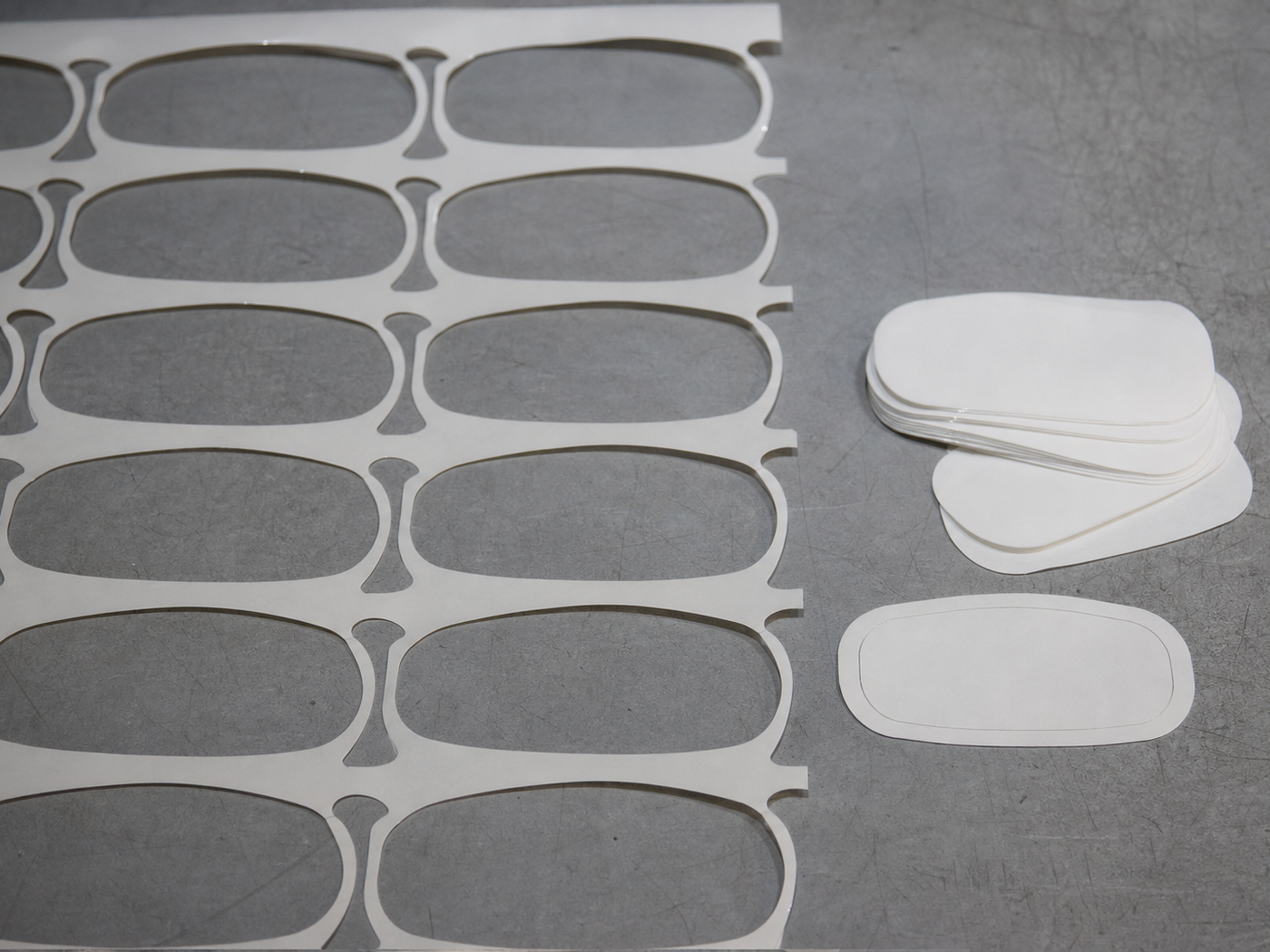
The relief runs to here, and no further.A cutting line cannot cross the component, so the shape starts from what is inside it.
A die cuts through the whole construction, so the cutting line has to clear the component instead of passing through it. That single constraint puts a floor under the shape: below a certain outline there is nowhere for the clearance to sit, and an RFID label stops being makeable at that size whatever the artwork asks for.
Everything the shape is allowed to be gets checked back against that one line.
Whose die it is, how it is kept for repeat orders and whether a change of shape means cutting a new one belongs with custom label work.
One more layer per label changes what a roll of a given size comes to.
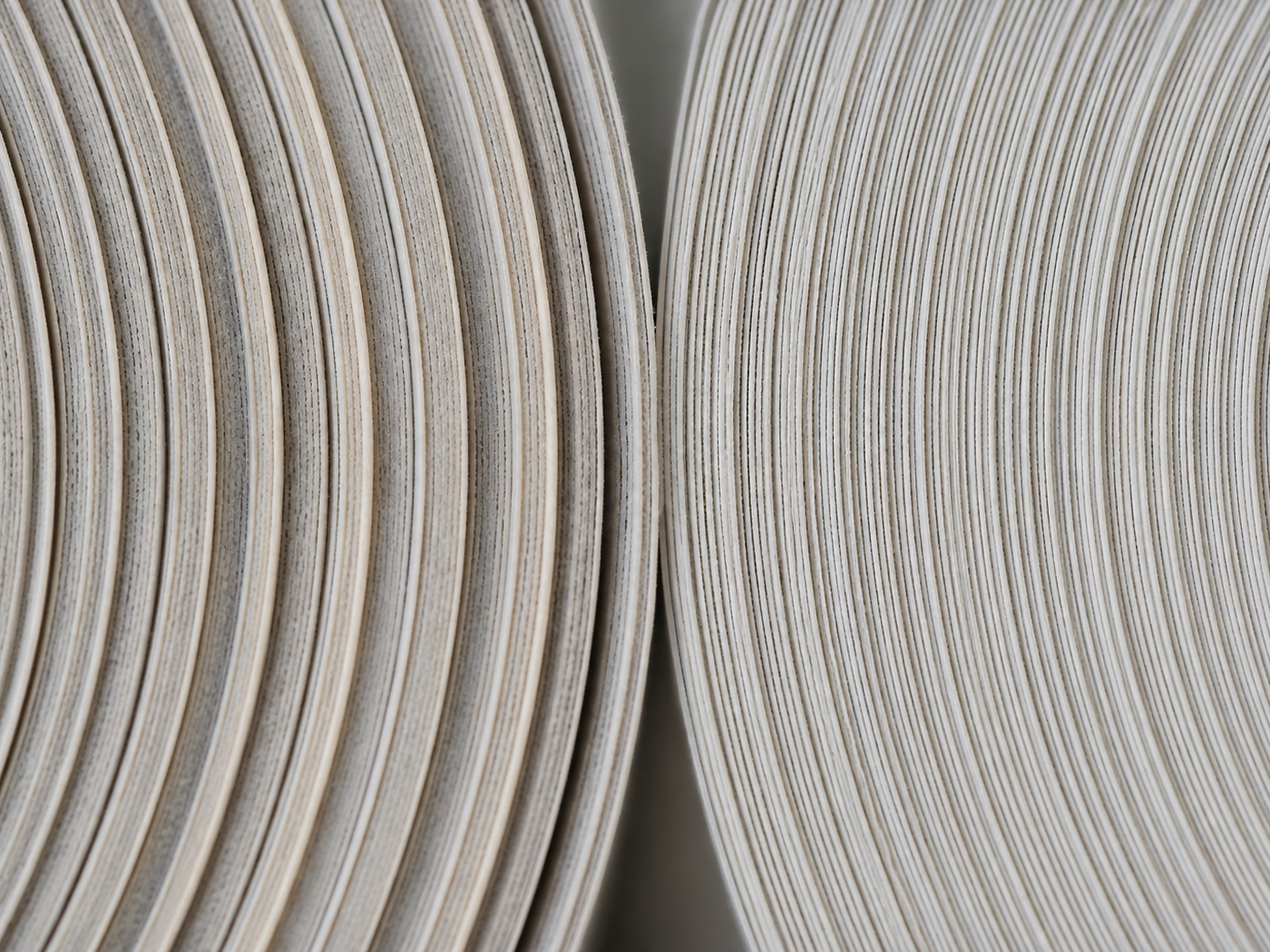
Every label on the roll is thicker than a printed one, and thickness compounds as the roll builds up.
Roll sizes, cores and case packs themselves sit on the roll specifications.
It sits at your end, not ours, so it has to arrive with the enquiry.
The surface a label ends up on is information that only exists at your end. We cannot look it up, and it is not in the artwork.
It belongs in writing at the start, because it lands on more than one layer of the build at once, and because a sample made against the wrong surface tells you very little. Steel and other metal containers, moulded plastic bins and corrugated cases each send the answer a different way.
How an adhesive behaves against a surface in general is set out on the adhesives overview. Choosing a build outwards from the container is what the custom label page is for.
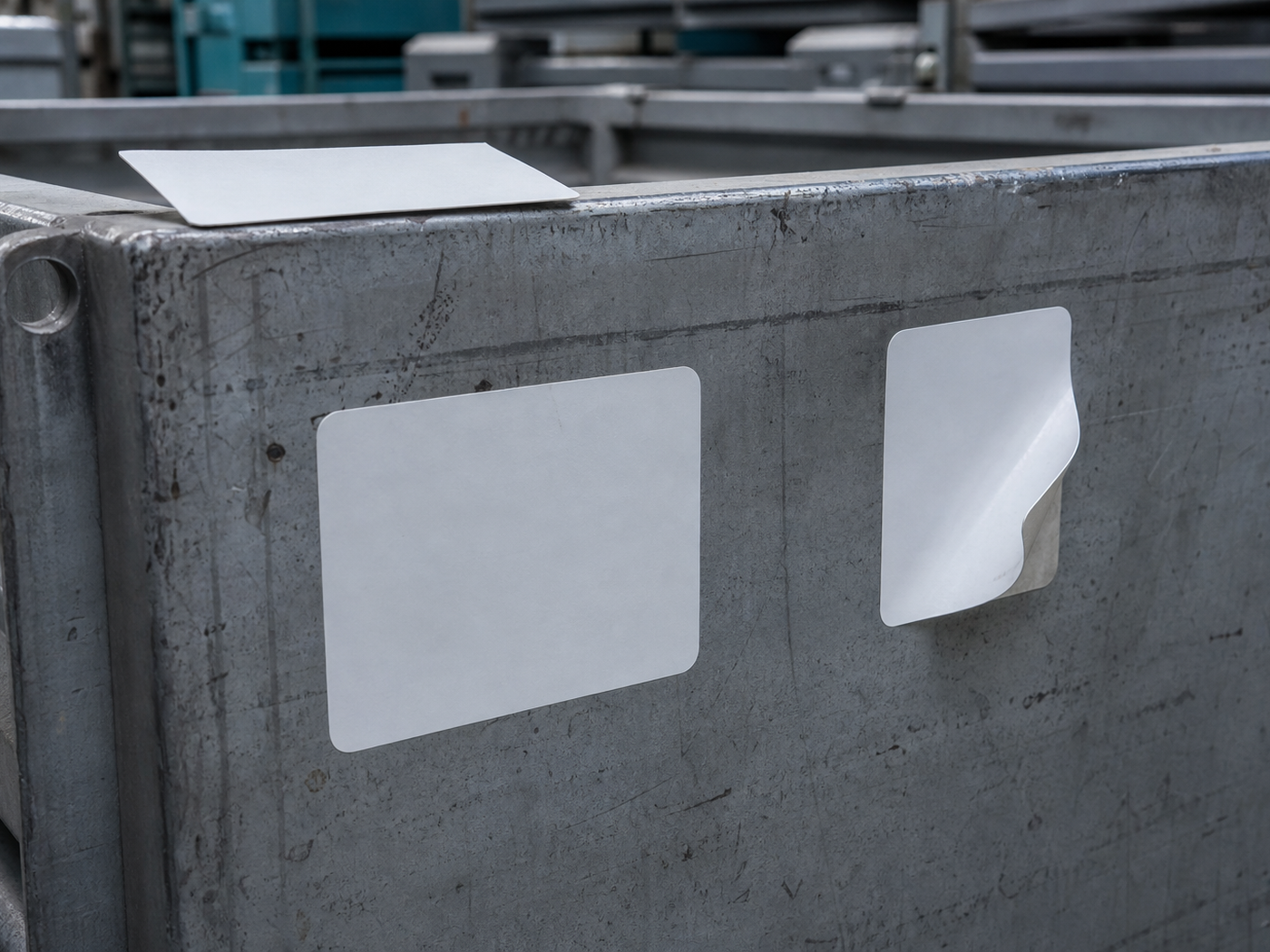
A container wall sends the answer one way, and it is the case that most changes what stays on the table.
Bins and totes arrive with their own curves and their own release behaviour.
Flute lines mean the face never bonds evenly across the whole of its area.
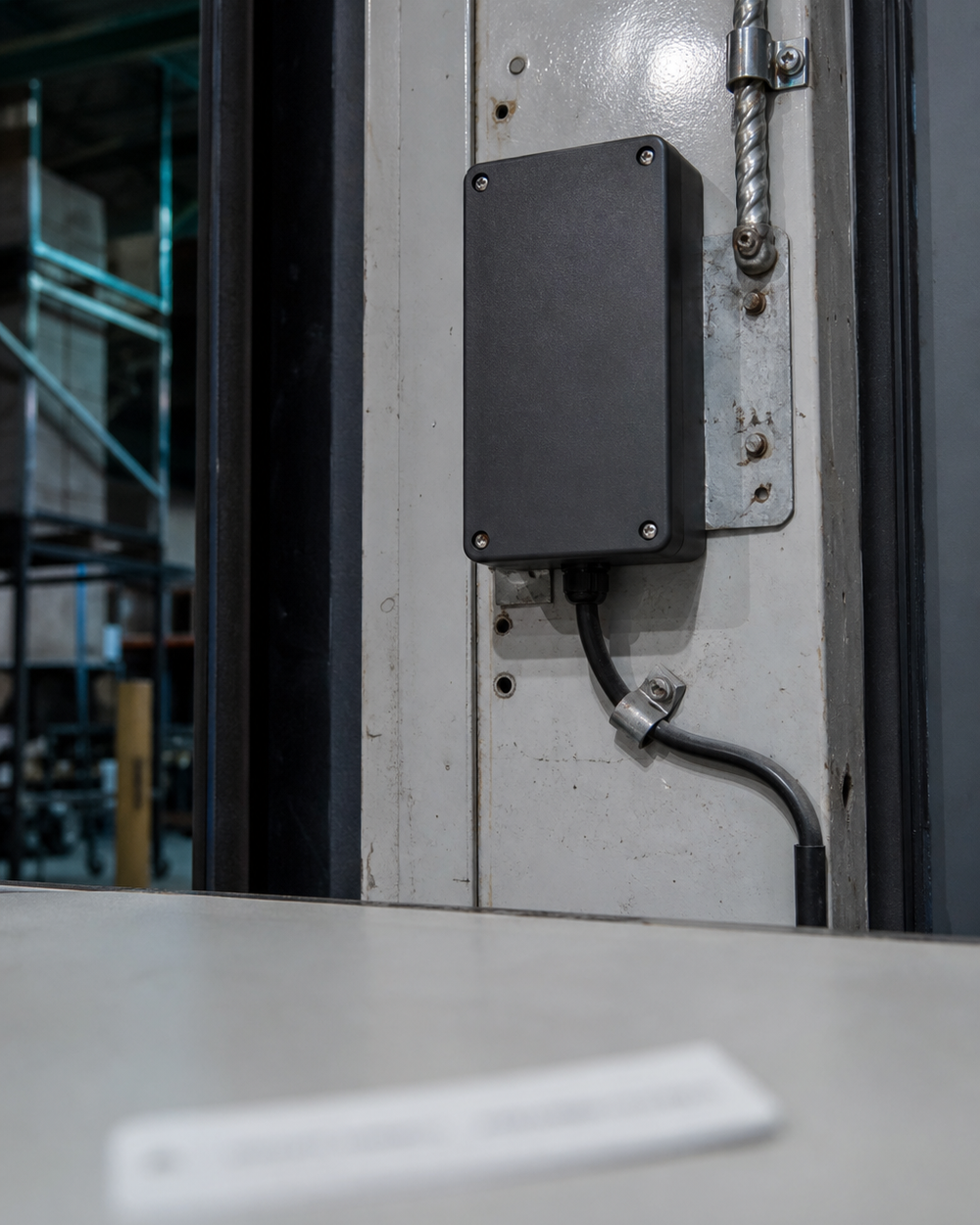
It is normally settled before a specification reaches us, and the label is what moves afterwards.
The band is an industry split rather than a supplier one: UHF sits around 860–960 MHz, and HF NFC at 13.56 MHz.
What it changes is the label itself. Each band carries its own antenna geometry, and geometry sets the smallest outline the construction will fit into, and how much of the face the clearance takes. That is where the layout and the cutting line get their limits from — they read as artwork decisions, but they are downstream of this one.
Contents and containers narrow it further. Metal, and liquid sitting behind the label, cut down which constructions stay on the table, so they belong in the enquiry with everything else, early enough to shape the quote.
The conditions it depends on are easier to check before the order than after it.
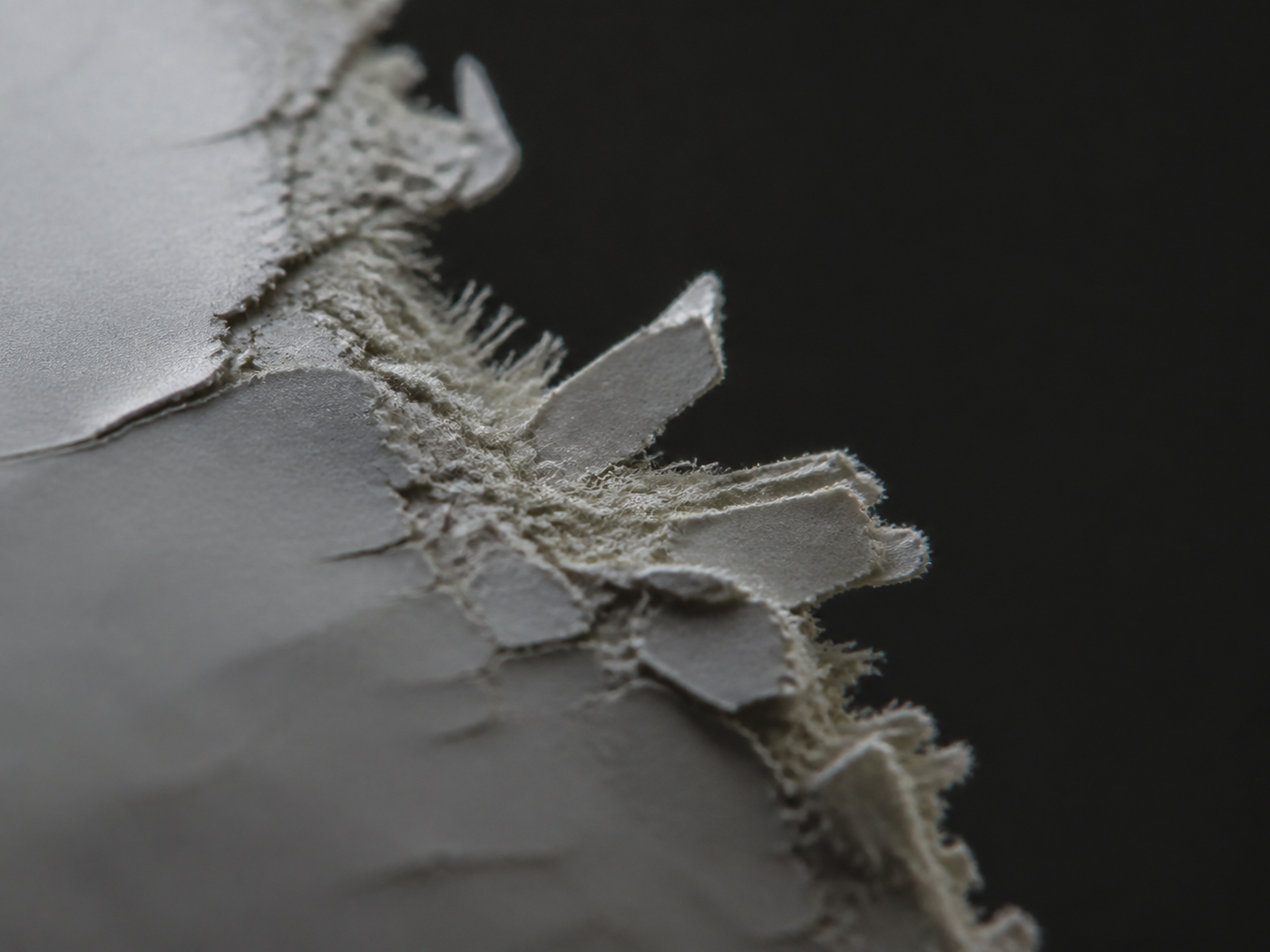
A face built to be weak gets weaker as the temperature drops, so a label that behaves on the packing bench can give way during ordinary handling in a chilled chain. That is a specification question, and it is settled at order time.
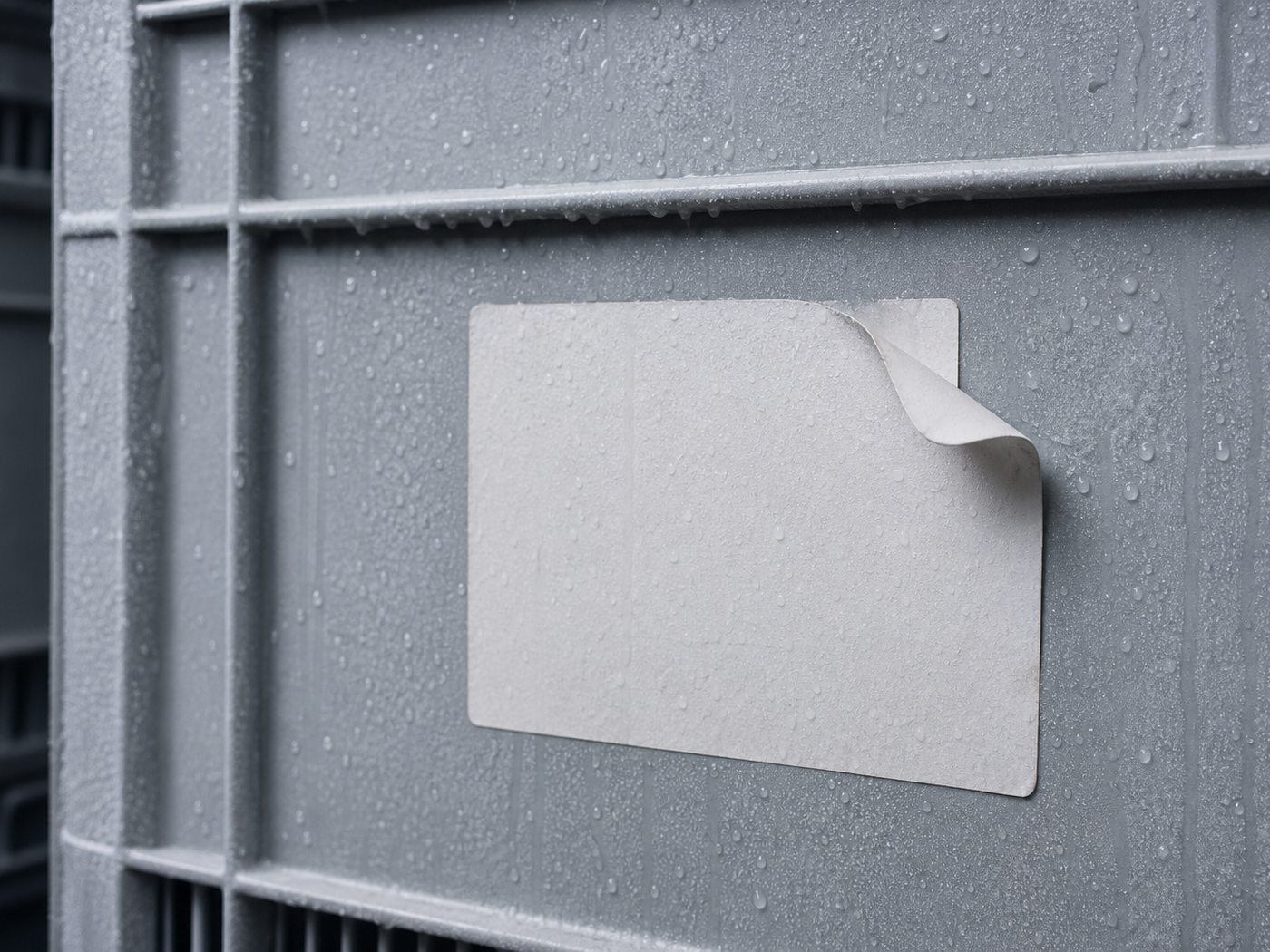
A tight radius puts the face under tension from the moment it is applied, and a weak face has less to give than a normal one. Rough and ridged surfaces do something similar — corrugated flute lines are the common case, where the face never bonds evenly across its whole area to begin with.
Scuffing, stacking and strapping mark a weak face without anybody having opened anything, and a mark that arrives that way is not distinguishable from one that did not.
None of this makes the construction unsuitable. It makes the surface, the temperature it lives at and the journey it takes worth stating with the enquiry, because those are what a sample has to be made against.
It is one decision, and it reaches further into the specification than it looks.
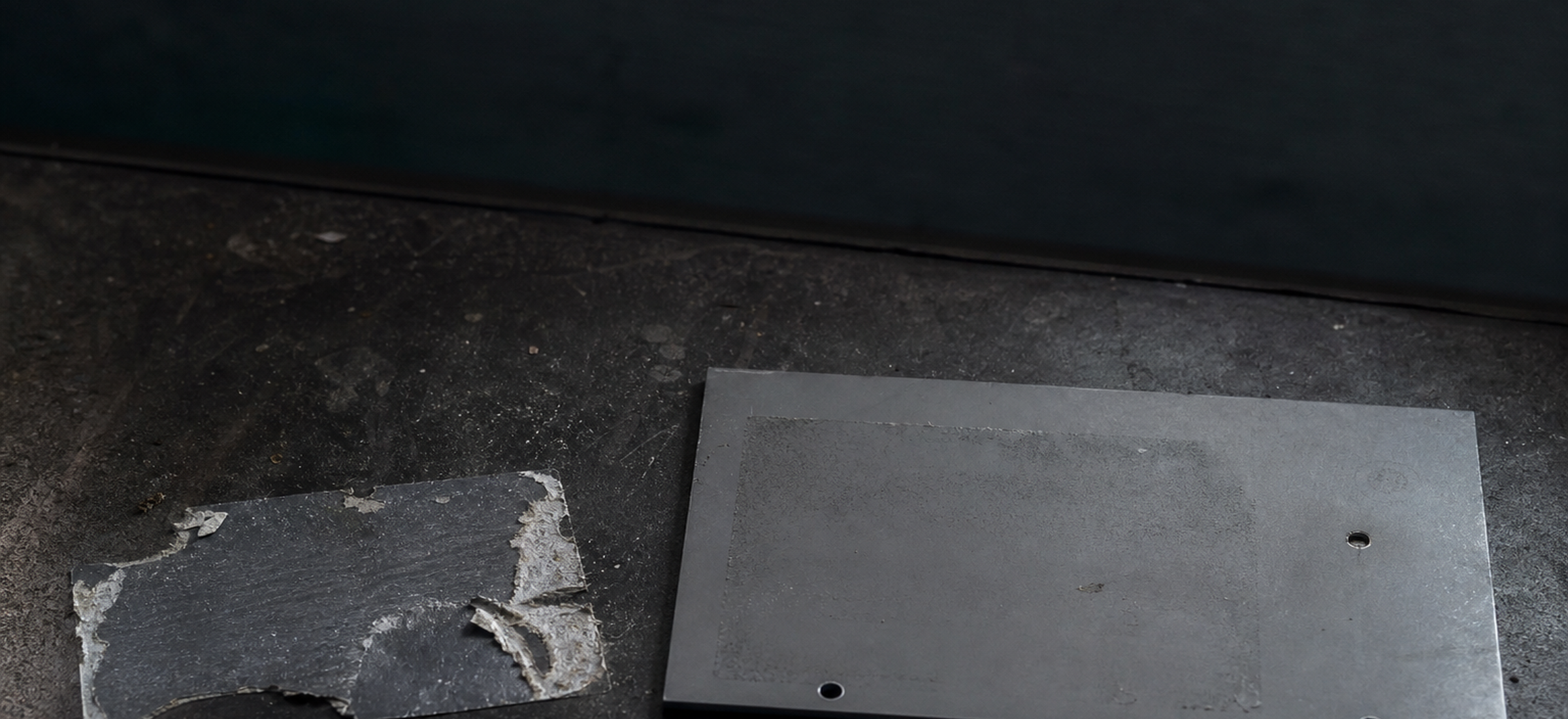
The two evidence constructions leave their proof on different faces, and the overview sets out which one leaves it where. That is where the description stops and the decision starts, because picking between them is an order-time choice, and what it settles reaches a long way past the label itself.
One decision, taken before quoting, that the rest of the specification is then written against.
A holographic face sits outside this decision. It belongs to the finish layer, and the finishes overview is where it is placed.

Some of it is yours to settle. Some of it is answered on another page.
A specification for this line is mostly a set of decisions that already exist at your end. Where the answer sits somewhere else on this site, the row says so instead of repeating it.

A quantity, an item and a yes or no on samples are enough to put a number against an RFID label run.
Send the specification as it stands, open parts included. Artwork that already exists is checked against the clearance before any of it is quoted as printable.
Send it as it stands. It is checked against the clearance, and what comes back names the element, the edge it fouls, and the distance it has to move to clear.
The item, the quantity and the reading side are enough to open a price. Settling the clearance first is cheaper than laying out a face and moving it afterwards.
The whole specification can also go through the full enquiry form.