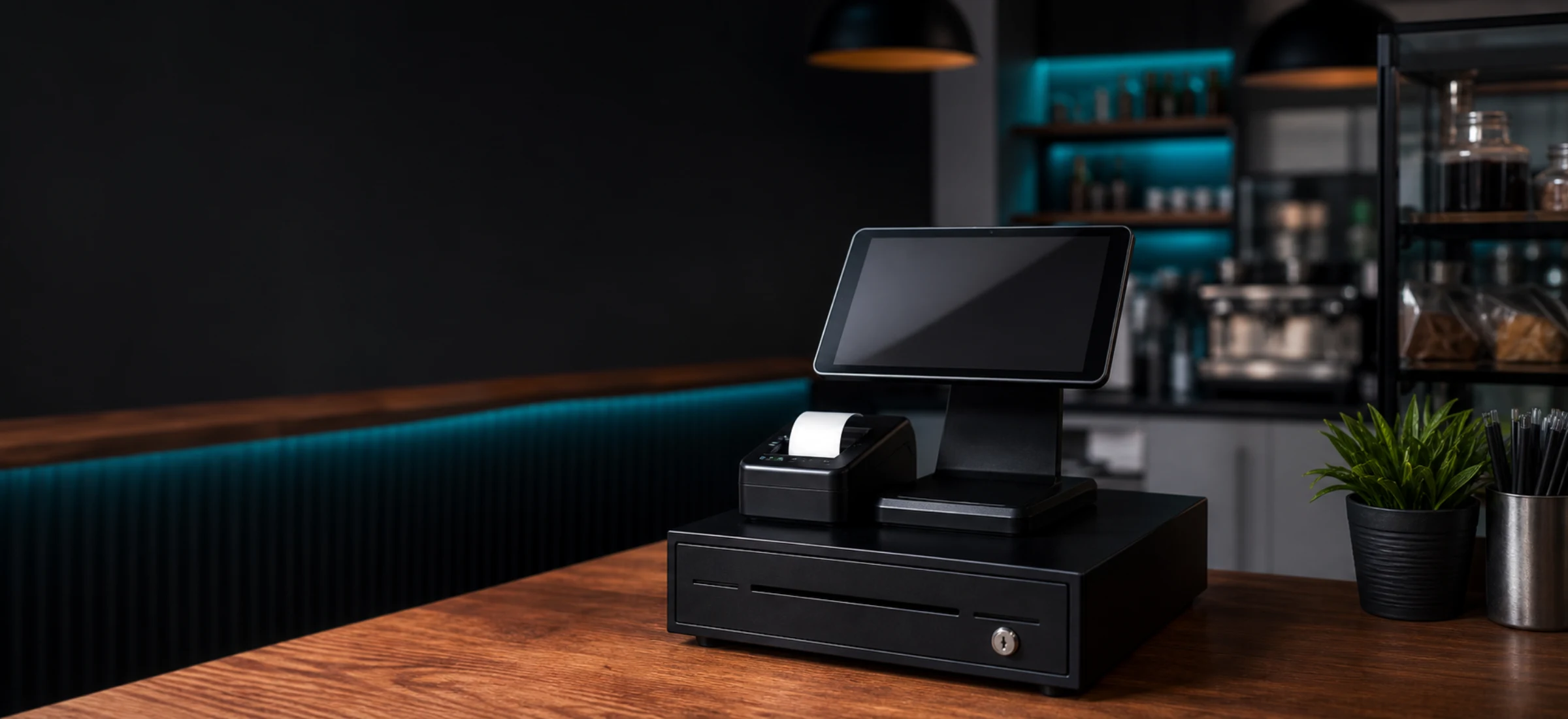
Thermal Paper Rolls and Receipt Paper for POS
A roll tells you what it is at the counter, usually with a queue waiting behind it.
Nobody inspects a receipt roll on arrival. It gets put in a drawer, and then one afternoon someone opens the printer mid-queue and finds out what was ordered. Everything below is written from that moment: what shows up there, and which decision made it show up.
- The lid will not closeWidth came from somewhere other than the well
- Third change this weekDiameter was set by the box, not by the counter
- It fed, it cut, it came out blankThe coated face went in the wrong way round
The Width Is Decided by the Machine
Two widths cover almost every counter, and the terminal picks which one.
Width is the one measurement you do not get to choose. A terminal has a paper well cut to a size, and thermal paper wider than that well will not close the lid, while narrower stock rattles sideways and drifts off the print head. Measure the old roll, or measure the well.
If both sit behind the same counter, they are ordered as two lines rather than one, because nothing about the two is interchangeable.
Thermal Paper Rolls by Diameter and How Often You Change Them
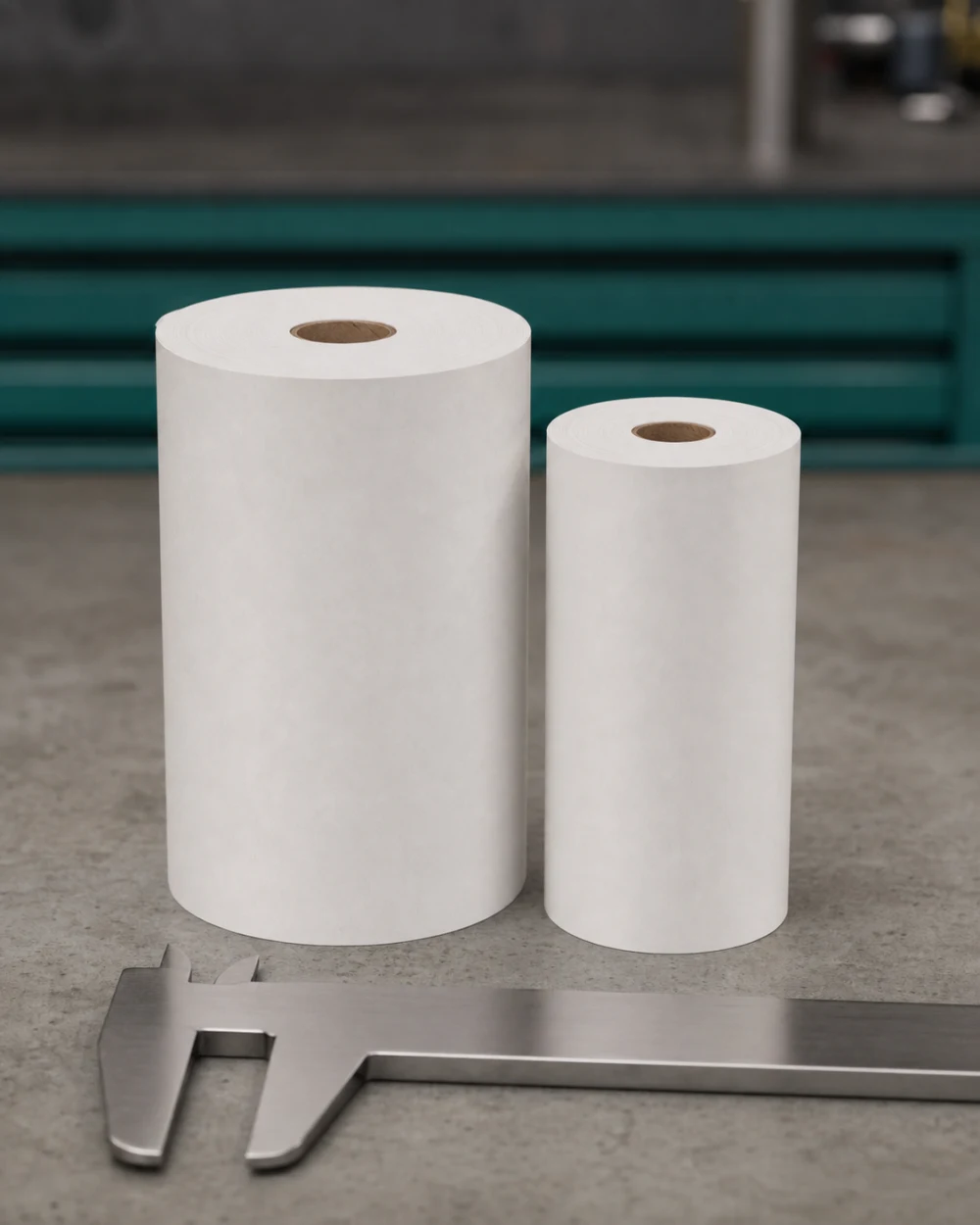
Same width, different roll. The second number is what decides the changeover.
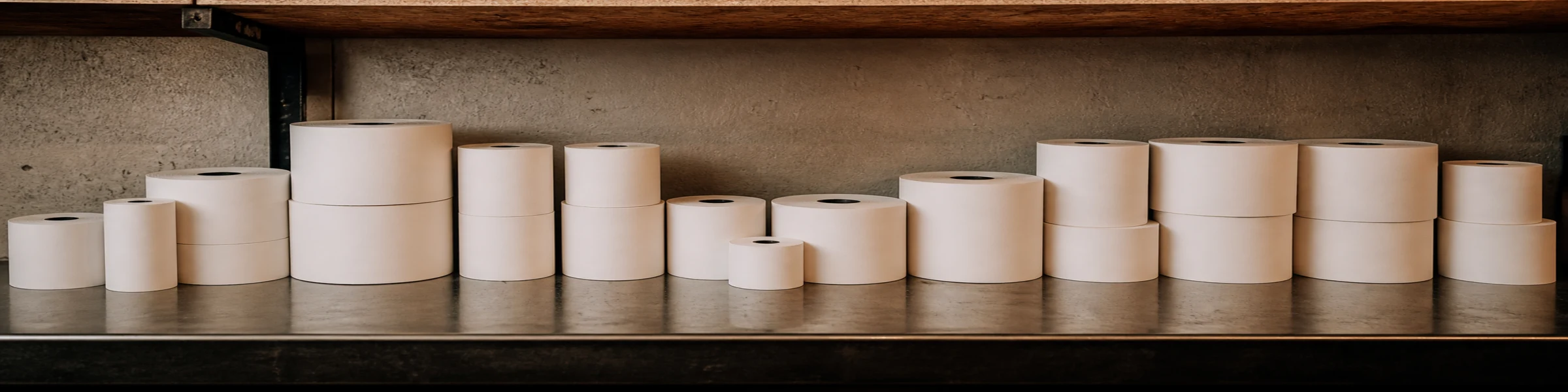
Once the width is fixed by the machine, thermal paper rolls still come in more than one build, and the difference is diameter. A bigger roll is the same paper wound further, so it lasts longer between changes and takes up more room in the well. Where the well is shallow, the diameter is capped whether you want it or not.
| Width | Roll diameter | What it suits |
|---|---|---|
| 57 mm | 40 mm | Portable and handheld terminals, card slips, low daily count |
| 57 mm | 50 mm | Compact counter printers where the well allows the deeper roll |
| 80 mm | 60 mm | Standard counter terminals on ordinary daily volume |
| 80 mm | 80 mm | Busy counters and kitchen printers, fewer changeovers per shift |
Cores run 12 mm, 13 mm and 1/2 inch. The core is a separate question from the width and the diameter, and it is worth stating on an order rather than assuming, because a roll that is right on both other numbers can still refuse to turn on the wrong spindle.
Where a counter is changing rolls more often than anyone likes, the diameter is the number to move first, and the well depth is what says how far it can go.
Which Side Takes the Image
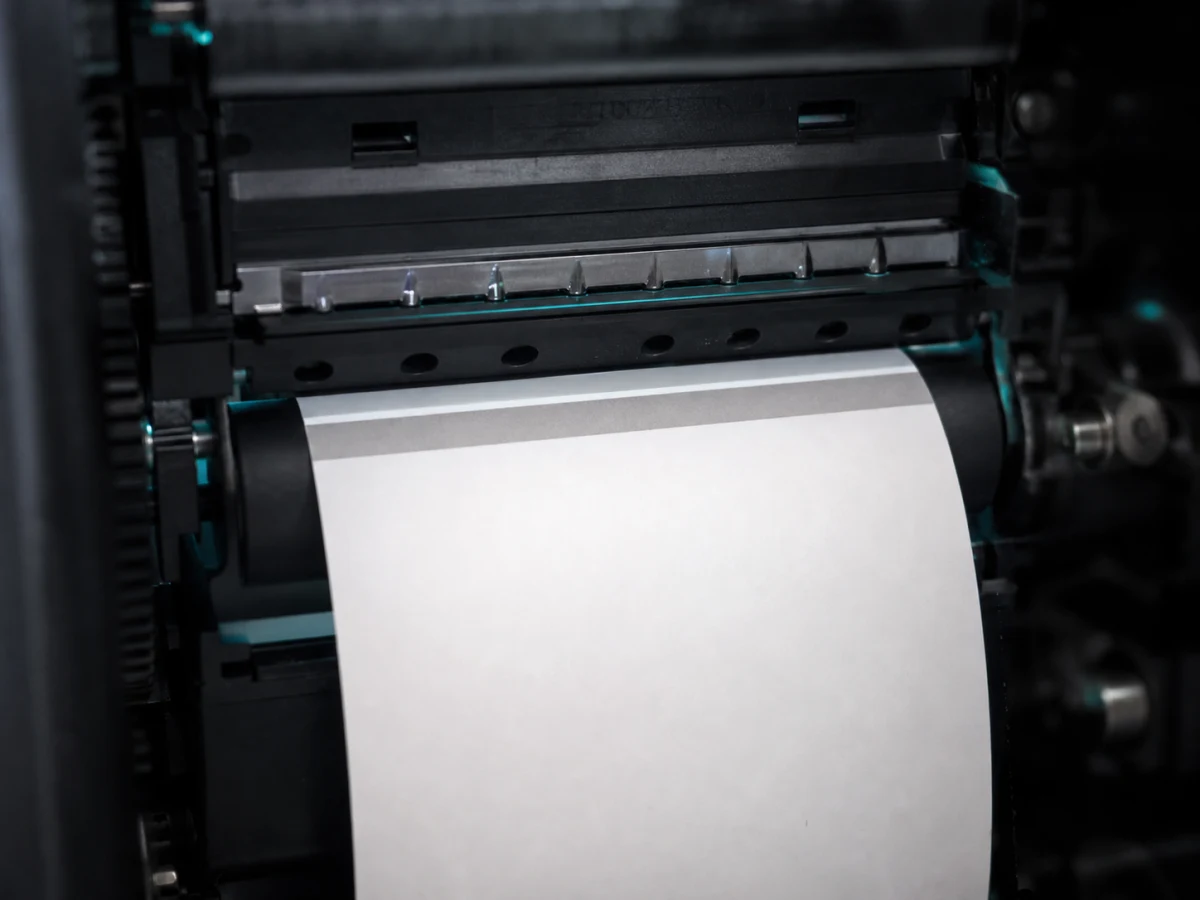
Only one face of the paper reacts to heat. Thermal paper carries its coating on a single side, and the print head has to meet that side. Loaded the other way round, the machine runs, the paper feeds, the cutter cuts, and what comes out is blank.
It is the failure that looks most like a broken printer and is least likely to be one. The check takes a moment: drag a fingernail or a coin edge across a corner of the paper, and the coated side leaves a grey mark.
Which way the coating faces relative to the core is worth confirming on the order, because a well that loads from underneath and one that loads from the front do not want the same wind.
Print Density, and Why a Receipt Comes Out Grey
The paper and the setting argue with each other, and the till shows who won.
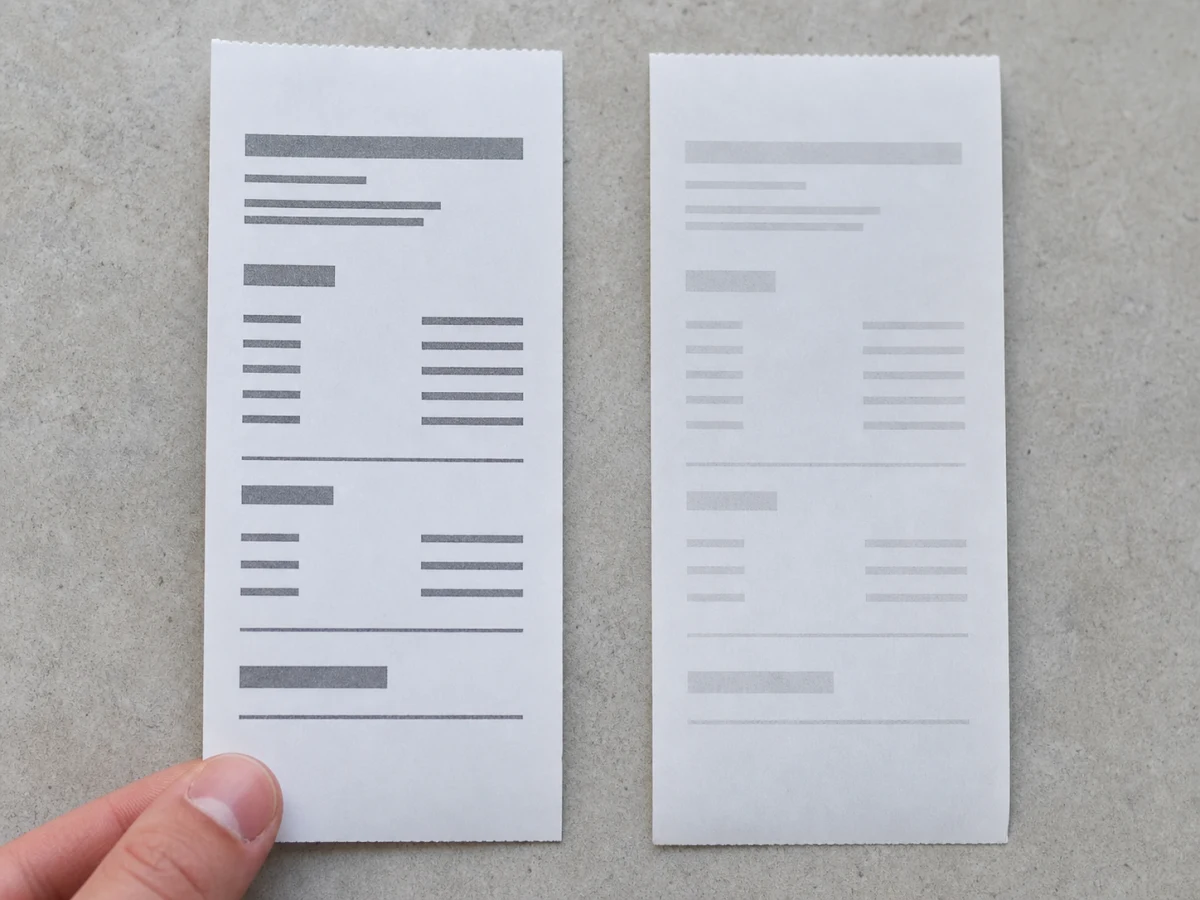
A faint receipt and a smeared one come from the same place. The head applies heat for a set time at a set energy, and the coating answers at its own rate. Pair a setting meant for a more reactive paper with a less reactive one and the print comes out grey; go the other way and the characters bloom into each other until the small type closes up.
Most counters meet this when the supply changes and nobody touches the setting. The roll is the new variable, so the setting is what has to move, and that is a menu item on the terminal rather than a fault.
Say on the order what your machine is set to and the stock gets matched to the setting, rather than leaving the counter to discover the mismatch on a Saturday.
What Actually Jams
The well has to accept all of it at once, not each part on its own.
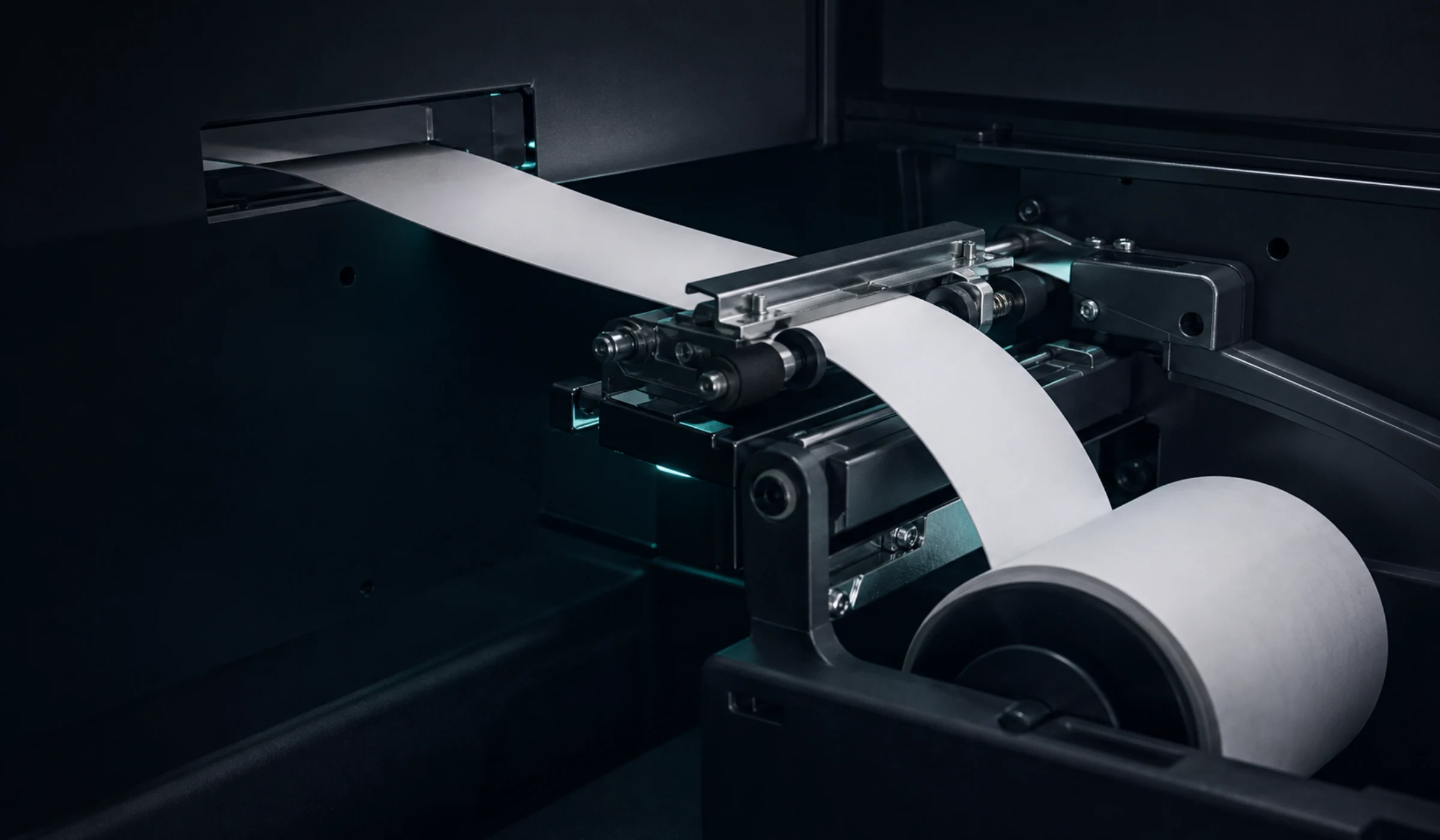
A jam is almost never the paper alone. The well holds a roll of a certain diameter, on a core of a certain size, made of paper of a certain thickness, and it all has to pass an exit slot of a fixed width. Each of those can be within its own tolerance while the combination is not.
Thickness against the exit slot
Heavier stock is stiffer through the same gap. Where the exit is tight, thicker paper is the part that binds first.
Diameter against the well depth
A deeper roll that clears the lid when new can still foul it when the spindle sits off-centre.
Core against the spindle
A core that is a size out either grips and stalls, or floats and lets the roll cone sideways as it unwinds.
Winding tightness
A roll wound hard feeds differently from a soft one, and it is the difference you feel rather than measure.
When a counter starts jamming after a supply change with nothing else touched, the combination is what changed, and it is quicker to send the numbers than to test them one at a time.
The Back of the Roll
The side nobody prints on is the side the customer keeps looking at.
The coated face carries the transaction. The reverse is blank paper leaving the counter in somebody's hand, and it can be printed before the roll is ever wound.
What goes there is ordinary print rather than anything thermal: a return policy so the counter stops explaining it, opening hours, a code that only appears on a receipt, the branch address, a line about a loyalty scheme. It prints once, at the factory, on the back of the web.
Because it happens at winding rather than at the till, it is decided when the roll is ordered, not afterwards.

Phenol-Free, and What You Can Put in Writing
What the term covers, and where our answer stops.
Thermal coatings need a developer, and which developer was used is what this question is really about. Phenol-free stock is made with a developer outside the phenol family. That is a statement about the paper's construction, and it is the level at which it can be answered on an order.
What it means
The coating is formulated without a phenol-family developer. It is a property of the stock, chosen when the paper is bought in, not something applied afterwards.
What we can state
Which stock a quote is written against, and whether that stock is a phenol-free grade. That goes on the quotation in writing, so the answer travels with the order rather than living in an email.
What we do not supply
We do not issue test results, document numbers or safety paperwork against these rolls. Where your own compliance file needs paperwork of that kind, say so before the order, because it changes which stock the enquiry should be routed to.
Answering only as far as the stock is a narrower answer than some suppliers give, and it is the one that stays true when somebody checks it.
How Long the Receipt Has to Stay Readable
A till receipt and a document that has to survive a filing cabinet are not the same job.
A thermal image sits in the coating rather than on top of it, so what fades it is what reaches the coating: warmth, daylight, and rubbing against whatever it shares a pocket or a folder with. For a receipt that gets scanned at the door and dropped in a bag, none of that has time to matter.
It starts to matter when the same slip is the only record of a warranty, a deposit, or an expense claim, and it is expected to be legible when somebody digs it out later.
| What the slip is for | What acts on it | Where it should come from |
|---|---|---|
| Card slip, itemised bill, kitchen ticket | Handled once, then discarded | This line |
| Queue ticket, weighing label, order chit | Read within the shift | This line |
| Warranty proof, deposit record, expense claim | Filed, handled repeatedly, kept in warm or bright places | Not from a till roll alone |
Where the last row is the real requirement, the usual answer is not a better till roll. It is either printing the copy that has to survive on something other than thermal stock, or capturing the record digitally at the counter and letting the paper slip be the disposable half. Either way it stops being a paper-buying decision, which is why we say so here rather than selling into it.
Trying a Roll Before You Switch
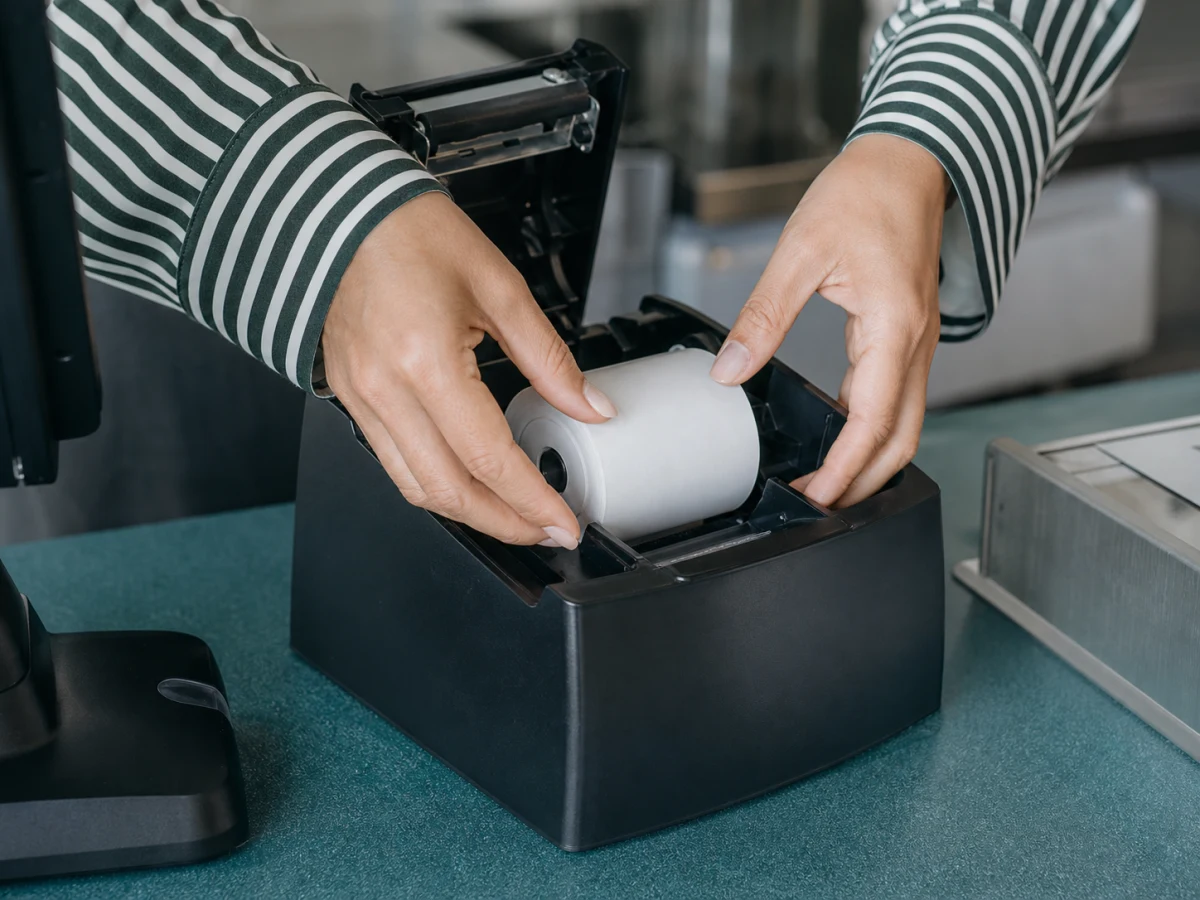
A roll that measures correctly can still behave differently in your well, and the counter is the only place that shows it. Put a single roll in the busiest terminal you have and leave it until it runs out.
Watch the changeover rather than the print. Whether the lid closes without pressure, whether the roll turns freely to the last few metres, whether the cutter takes it cleanly every time, whether the print stays the same shade from the outside of the roll to the core. A roll that behaves at the start and drags at the end is the one that will generate complaints once it is standing on a pallet.
On this line a sample is a single roll rather than a case. Carriage for it is either charged to you or collected on an account you nominate, and saying which one up front keeps the sample from sitting in dispatch waiting for an answer.
Paper Rolls Here, Labels Elsewhere
Where the paper line stops, and which line picks it up.
Rolls for terminals that image on the paper itself: receipts, card slips, kitchen tickets, weighing and queue slips, printed on the reverse or plain.
Once there is adhesive involved it stops being a paper roll. Liner, backing and release are their own set of questions and they are answered on the label side.
If the image arrives from a ribbon instead of from the paper, the pairing that decides it is worked through on the label line.
A face measurement in inches describes a label, and it gets priced where labels are priced.
Whether a printed code scans every time is a question about the code, not about the stock it landed on. That question sits with wholesale barcode label supply.
Send What Your Till Runs
The width, the diameter and roughly how fast you get through them.
Measure the roll currently in the machine, or the well if there is nothing in it. With those two numbers and a rough monthly count, a quote can be written against a stock rather than against a guess.
Where the enquiry runs wider than one line, everything gets taken in one pass on a wholesale receipt paper supplier's full enquiry form.